The Project Fabrication and Engineering Industry operates on complex, large-scale, and highly customized assemblies often built to client-specific design and material specifications. From heavy steel structures, structural steel fabrication, solar structures and pressure vessels to custom machinery fabrication, every project involves a series of intricate, multi-stage processes that must be executed with precision. These include material procurement, stage-wise procurement, stage-wise procurement, stage-wise inspections all while adhering to tight timelines and cost constraints within metal fabrication environments.
Lighthouse ERP for Fabrication and Engineering industry is built to manage these challenges with project-specific production planning, material traceability, and real-time process monitoring for metal fabrication and project-based manufacturing. It supports multi-level BOM and stage-wise and stage-wise and stage-wise progress tracking for processes like CNC C & Z roll forming, forming, shearing, bending, plasma cutting, gas cutting, MIG welding, arc welding, power presses, milling & drilling machines.
The system facilitates contractor billing, third-party inspections, and customer approvals, streamlining operations from design to dispatch. With real-time visibility across fabrication units, project WIP status and Project Costing, Lighthouse ERP ensures that large-scale fabrication projects are executed with accuracy, accountability, and profitability.
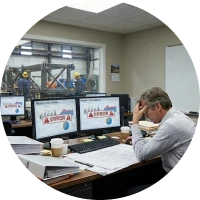
Fabrication involves multiple interdependent stages cutting, machining, welding, assembly, painting. Without a integrated system, it's difficult to track progress in real time, leading to missed deadlines and miscommunication between departments.
Without BOM Management software, frequent design revisions and manual Bill of Materials handling often result in production errors, use of outdated specs, and unnecessary rework all of which directly increase cost and delay project timelines.
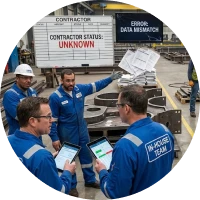
A significant portion of fabrication is executed by third-party contractors. In the absence of a system to track contractor-wise job work status and material flow, it's hard to monitor productivity, quality, or billing accuracy.
Fabrication jobs are rarely repetitive, they're highly customized. Relying on spreadsheets or disconnected systems for planning often leads to overbooking machines or underutilizing manpower for priority orders.
Material planning is often inaccurate due to poor estimation, especially when multiple projects require similar high-grade materials. Delays in procurement stall critical operations on the shop floor.
Welding is critical in fabrication, but in many cases, industries lack digital records of weld logs, filler wire usage, and procedure qualifications putting certifications and traceability at risk.
Fabrication jobs require granular cost tracking. However, traditional accounting systems fail to capture real-time data for job-wise consumption, contractor payments, and material usage—making it hard to calculate true profitability.
Daily job status is often updated at end-of-day or through manual registers. This lag prevents timely decision-making and affects coordination between design, procurement, and production teams.
Important engineering documents like fabrication drawings or material test certificates are often scattered across emails or physical folders, resulting in loss of information or delays during audits and inspections , with document management module in erp everything can be managed.
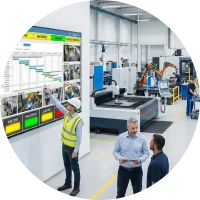
Manufacturing ERP software enables end-to-end tracking of assemblies from raw material to final dispatch across complex fabrication stages such as cutting, welding, machining, and surface treatment. It helps identify bottlenecks and maintain production continuity.
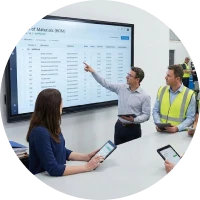
Fabrication jobs often involve dynamic changes in design specs. ERP maintains a centralized, version-controlled Bill of Materials (BOM), ensuring all departments work on the latest design, reducing rework and material wastage.
Much of the fabrication work is outsourced. ERP tracks job work assigned to contractors, monitors their productivity, automates billing based on work completion, and avoids disputes on manual entries.
Fabrication ERP allows production teams to plan manufacturing schedules based on customer-specific drawings, deadlines, and material grades ensuring every order is executed per commitment.
Quality management in ERP facilitates quality inspection at multiple levels raw material, in-process, and finished goods. It also integrates third-party inspection workflows, capturing reports and acceptance records for full traceability.
ERP used data from CAD applications for exact material requirements based on job cards. It optimizes purchasing and supports procurement of special-grade materials with vendor lead-time visibility.
Track welding wire usage for projects that demand high compliance (such as boilers, tanks, or structural steel).
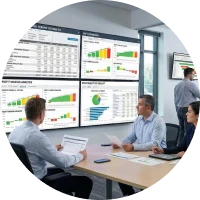
Finance module in ERP allows costing and profitability analysis at a project assembly level covering raw material costs, labor, outsourced work, and overheads.
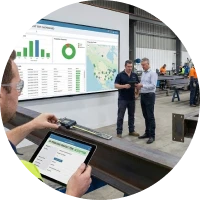
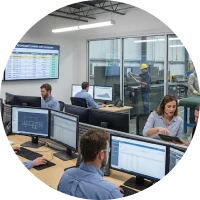
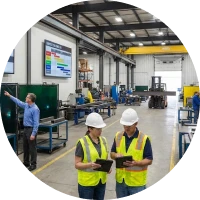
Supervisors and managers can update job progress via tablets or terminals on the shop floor. This keeps the entire team aligned on project milestones and fabrication timelines.
Captures detailed product attributes, related drawings, set-wise item breakdown, and links to similar products for precise BOM handling.
Supports Pre-Engineered Building (PEB) planning and allows dynamic job/work order rescheduling based on material, machine, or manpower constraints.
Tracks customer orders through every process stage with real-time WIP status flags—Under Process or Completed linked to specific job cards.
Captures machine-wise and operator-wise production data, including rejections and outputs, enabling performance analytics and accountability.
Automatically calculates operator incentives based on predefined production points or rates for each process or quantity completed.
Uses past sales data and pending order analysis to generate accurate production requirements for efficient resource allocation.
Defines standard cycle times for each process and machine to support better planning, benchmarking, and efficiency monitoring.
Allows batch production by combining multiple job cards under a single process to optimize machine utilization and reduce setup time.
Manages inspection data for each stage (Accepted, Rejected, Rectified), ensuring traceability and compliance throughout the production lifecycle.
Tracks project-based progress, completed work, remaining scope, and actual costing including material, labor, and overheads for profitability analysis.