Erp for Aluminium Extrusion Profiles

ERP software for the Aluminium Extrusion and Profiles

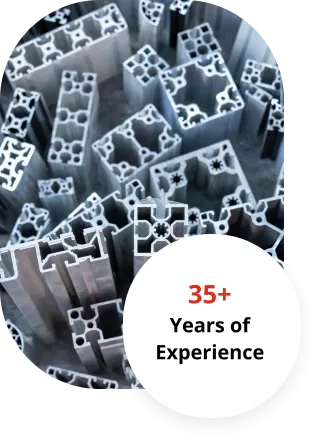
The global aluminum extrusion market was worth 19.1 Mn MT in 2019. Looking forward, the market is forecast to reach a volume of 24.3 Mn MT by 2025. The increase in the construction of green buildings and automotive sector are the key factors driving the market growth. Aluminum products offer strength and malleability, creating demand in industrial applications. Extruded aluminum are 100% recyclable and lightweight, used in the fabrication of automobiles parts.

Lighthouse ERP for Metal and Minerals Profiles Industry enables Production Planning and monitoring of various stage wise processes which is a vital requirement of this business vertical.

Lighthouse Aluminium Extrusion ERP is designed to provide complete visibility across all supply chain, ERP Software for Logistics, Inventory and financials.
Erp for Agriculture Industry
lighthouseindia
lighthouseindia

Process Flow of Aluminium Extrusion and Profiles

Process flow for Solar Panel

Challenges of the Aluminium Extrusion and Profiles

Challenges Production Planning

Production Planning

Production planning is challenging without proper alignment between production output and customer demand.

Challenges Managing the waste materials

Managing the waste materials

Ineffective planning can lead to high scrap rates and excessive material waste significantly impacting operational efficiency and production costs.

Challenges quality Control

Maintaining Consistent quality Control

Maintaining consistent quality throughout the production process is important to avoid any further rework, rejection, or reduced customer satisfaction.

Challenges tool maintenance

Downtime due to tool maintenance

Poor maintenance and unexpected tool downtime can severely disrupt production schedules and reduce productivity.

challenges order management

Order Management and Customization

Managing custom orders that require specific profiles, lengths, and finishes while ensuring timely delivery can be challenging.

Challenges Batch Tracking

Traceability and Batch Tracking

Maintaining the traceability of raw materials and finished products is essential, particularly in cases where products are returned or quality issues arise.

Benefits of ERP for Aluminium Extrusion and Profiles

Benefits of ERP for Aluminium Extrusion
  • Plans production according to demands

    ERP Software for aluminium extrusion industry aligns production and schedules with demand, supporting both Make-to-Order and Make-to-Stock improving response times and stock management.

  • Helps in reducing waste in aluminium extrusion industry

    Optimized Press Planning Reduces waste by maximizing billet usage, cutting costs, and improving material efficiency.

  • Enable quality checks at various stages

    Quality Control module of ERP can integrate quality control checks at various stages of the extrusion process, from billet heating to final finishing minimizing rework and rejections.

  • Tracks tools performance and maintenance

    Die Management tracks die/tool performance and maintenance history, supporting proactive maintenance and effective planning.

  • Streamlined Order Management and Customization

    ERP software can streamline order management, from capturing custom specifications to tracking production and delivery status.

  • Traceability and Batch Tracking

    Lighthouse ERP enables complete traceability from raw materials to finished goods, allowing quick identification and resolution of quality issues.

Features of Lighthouse ERP for Aluminium Extrusion and Profiles

icon

Product Details

Details of Products, Attributes, Production Process Group, Tools and Consumables required Similar Product.

icon

Production Press Planning

Grouping of similar products in one work order plan to save production time. Work Center/ Process wise Planning details.

icon

Multi-Level, Process-Specific Bills of Material

Unlimited, pre-defined, BOMs meet the unique needs of your manufacturing processes and reflect critical interdependencies, and routings for accurate scheduling and planning.

icon

Die Issue Planning

Die Issue to Production Floor

icon

Tool Maintenance

Easily track and schedule tooling usage highlighting out-of-service tools and dies for accurate work order or process scheduling.

icon

Production Declaration

Foundry & Extrusions Daily Production and Inventory Status

icon

Raw Material Reconciliation

Standard Vs Actual Consumption of Raw Material

icon

Press Breakdowns/Die Breakdown Details

Capturing of Breakdown time, cause, symptoms, corrective action.

icon

Production Costing

Definition of Production rate, process and machine wise with per hour production capacity.

icon

Production Flexibilty

Work Order/ Job Order rescheduling. Production is a process for multiple job cards clubbed together.

icon

Work Order Status

Process/Stage-wise status of Customer Orders that are under production.

icon

Material Requirement Plan

Based on past Sales Data & Pending Orders. Min & Max and Re-order Level for store material procurement.

icon

Plant Efficiency

Load Analysis, Machine Efficiency. Definition of Cycle Time for processes and machines

icon

Accurate Stock

Order and Process wise WIP Stock report indicating (Under Process/ Completed)

icon

Quality Control

Process wise inspection & QC to capture rejected, Rectified, and accepted Quantity.

Frequently Asked Questions About ERP for Aluminium Extrusion and Profiles

It's an ERP focused on press-based production of aluminium profiles — covering production planning, die and tool management, billet usage, and custom orders with specific lengths, shapes, and finishes. It supports both make-to-order and make-to-stock approaches, which matters because extrusion plants often run both models side by side.

Press planning groups similar products together into work orders to maximize how efficiently billets are used during extrusion runs. Planning press loads with billet usage in mind, rather than just order sequence, cuts down on the offcuts and partial-billet waste that add up over high production volumes.

The system tracks tooling usage and maintenance history, flagging dies that are out of service or due for servicing before they're scheduled into a work order. Since a die going down mid-run can stall an entire press, having this visibility ahead of scheduling helps avoid unplanned production stoppages.

Yes — order management captures the specific requirements of each custom order, profile shape, length, and finish, and tracks production and delivery status against those specifications. This matters in extrusion because customer orders frequently differ from standard catalog items, and matching production output to custom specs manually is error-prone.

Quality control checkpoints run from billet heating through to final finishing, with each stage recording rejected, rectified, and accepted quantities. Catching issues at intermediate stages, rather than only at final inspection, reduces both the rework needed and the volume of finished product that ends up rejected.

It's the process of grouping similar products into a single work order plan to reduce changeover time on the press, along with work-center and process-specific scheduling. Since press changeovers — changing dies, adjusting settings — take time, grouping similar jobs together is one of the more direct ways to improve press utilization.

The system compares the standard expected consumption of raw material against actual consumption for each work order. Consistent gaps between standard and actual usage usually point to either a process issue or a data entry problem, and this reconciliation built into the ERP surfaces those gaps without a separate manual audit.