ERP for Logistics and Warehousing Industry

ERP software for the Logistics and Warehousing Industry

In the logistics and warehousing industry, managing goods movement, tracking shipments, and maintaining accurate stock records are everyday challenges. Delays in delivery, lost inventory, or incorrect billing can lead to serious losses and unhappy clients.

Lighthouse ERP for Logistics and Warehousing is designed to handle these issues with ease. It helps track every shipment in real time, manage inventory across multiple warehouses, and keep clear records of where each product is stored. From generating lorry receipts to managing weighbridge bills and SG bills, everything is automated reducing manual work and errors.

Each item is tagged with a lot or serial number, so it’s easy to trace its movement at any stage. Whether products are moving from the manufacturing unit to stockyards or being delivered to customers, Lighthouse ERP gives full control over transportation, warehousing, and billing processes all in one system.

This ERP solution helps logistics and warehousing companies improve delivery accuracy, avoid stock confusion, and run daily operations more smoothly and efficiently.
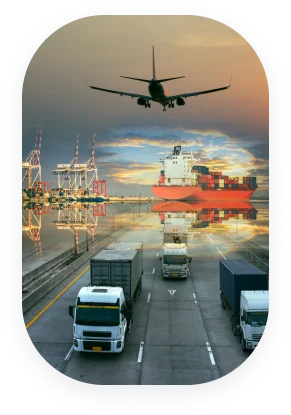
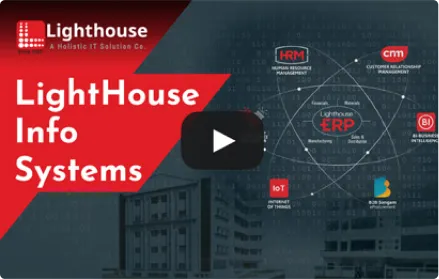
ERP for Logistics and Warehousing Industry
lighthouseindia
lighthouseindia

Challenges of Logistics and Warehousing

Challenges Lack of Real-Time Shipment

Lack of Real-Time Shipment Visibility

Manual tracking methods make it difficult to monitor cargo in transit, causing delays and uncertainty so tracking with integrated software becomes a necessity.

Challenges Disorganized Inventory

Disorganized Inventory Across Multiple Locations

Managing proper tracking, identification of the exact location and movement history of a product or commodity becomes impossible.

Challenges Error-prone Billing Process

Manual and Error-prone Billing Process

Generating weight-bridge bills, and delivery notes manually causes delays and calculation errors, streamline with documentation erp module.

Challenges Inefficient Warehouse

Inefficient Warehouse Space Utilization

Improper space planning and placement slow down picking, and dispatch processes so a proper warehouse management systems can help in this.

Challenges Poor Coordination

Poor Coordination Between Logistics and Accounts

Disconnected systems lead to gaps in transportation costs, delivery status, and invoicing.

Benefits of ERP for Logistics and Warehousing

Benefit Real-Time Transportation

Real-Time Transportation and Delivery Tracking

ERP software for logistics provides live tracking of shipments, improving route planning and delivery accuracy.

Benefit Automated Inventory Management

Centralized and Automated Inventory Management

ERP for warehouse management synchronizes inventory across all locations with dynamic stock control and reorder alerts. Each product has a unique lot/serial number for precise tracking.

Benefit Automated Billing

Automated Billing and Documentation

The system auto-generates weight-bridge entries, SG bills, and transport invoices—saving time and eliminating errors.

Benefit Optimized Warehouse

Optimized Warehouse Layout and Storage Planning

Smart warehouse management features improve shelf utilization, streamline picking routes, and speed up fulfillment.

Benefit Integrated Logistics

Integrated Logistics, Inventory, and Finance Modules

A unified ERP platform connects logistics, warehouse, and accounting operations for better decision-making and cost control.

Features of Lighthouse ERP for Logistics and Warehouse Industry

icon

Freight Rate & Quotation Management

Manage client-specific/general rates and generate sales/purchase freight quotations easily.

icon

Automated Transport Billing

Create sale bills based on gross, net, or ideal weight; supports daily and multi-LR billing.

icon

Lorry Receipt (LR) Management

Generate and upload LRs manually or via Excel; integrated with SAP/Oracle for stock yards and railway siding.

icon

Vehicle Maintenance Tracking

Maintain vehicle-wise records including insurance, permits, service logs, and repair history.

icon

Fuel & Tyre Monitoring

Track fuel and lubricant usage, tyre status, and running cost per kilometer.

icon

Trip & Vehicle Movement Logs

Record detailed trip data including start/end readings, expenses, accidents, and idle time.

icon

Transporter Payment & Penalty System

Handle advance payments and auto-apply penalties for delays, shortages, or non-compliance.

icon

Inventory & Work Order Integration

Link inventory with vehicle movement, trip challans, and work order tracking.

Frequently Asked Questions About ERP for Logistics and Warehousing Industry

It's an ERP designed for logistics service providers and warehouse operators who need to track goods movement across transport legs, manage multi-location inventory, automate billing documents like lorry receipts and SG bills, and coordinate between their operations and accounts teams. The system handles both the physical movement of goods and the financial records tied to that movement in one integrated platform.

LRs are generated manually or uploaded via Excel and linked directly to shipments, stock records, and billing. Integration with SAP, Oracle, or weighbridge systems allows LR data to flow automatically from the point of dispatch rather than being re-entered at multiple touchpoints. This connected workflow is what reduces the billing errors and delivery discrepancies that occur when LR management is disconnected from inventory and accounts.

Weight readings from weighbridges are captured automatically, and billing — whether on gross weight, net weight, or ideal weight — is calculated and invoiced from those readings without manual entry. SG bills and transport invoices are generated in the same workflow. For logistics businesses processing large daily volumes of weight-based transactions, this automation is the difference between accurate billing at scale and a correction backlog.

Each vehicle has a maintenance record covering insurance, permits, service logs, and repair history. Fuel and lubricant consumption, tyre status, and running cost per kilometre are tracked trip by trip, so fleet managers know which vehicles are costing disproportionately to maintain — and can schedule maintenance or replacement proactively rather than after a breakdown disrupts operations.

Stock is tracked by lot or serial number across every warehouse location, with dynamic reorder alerts and automated replenishment triggers. When goods move between locations, the transfer is recorded with full traceability so stock figures at every location are accurate in real time rather than reconciled at month-end. Physical inventory reconciliation tools help close any gaps between system records and actual counts.

Advance payments to transporters are recorded, and penalties for delays, shortages, or non-compliance are applied automatically based on contract terms. This removes the manual process of calculating and communicating penalties, which often leads to disputes when transporters receive a penalty deduction they weren't expecting because they had no real-time visibility into their own performance status.