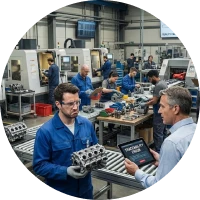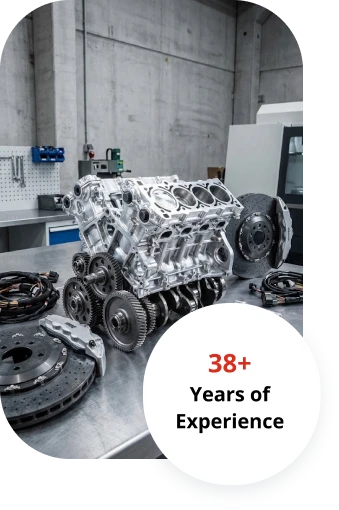
The auto components engineering industry is characterized by numerous product variants, precision manufacturing needs, and strong time-to-market pressure. Whether you are involved in forging, machining, stamping, or precision automotive parts manufacturing, you need a system that keeps operations lean, traceable, and agile.
From punching and stamping to casting and tool & die maintenance, Lighthouse ERP for Auto Components Manufacturing is specially designed to meet complex production demands and help manufacturers manage every stage of the automotive component fabrication process.
The automotive components industry, especially OEM and Tier-1 & Tier-2 suppliers, requires strict control over multi-level BOMs, batch and serial traceability, real-time shop floor monitoring, and just-in-time (JIT) supply chain management. Customers expect high-quality components delivered on time with full material traceability and quality management. Planning production schedules and shop-floor operations in such environments is challenging, and this is where ERP for the Auto Components Manufacturing Industry becomes essential.
Automotive ERP software automates and integrates core business processes, ensuring that forging, machining, heat treatment, subcontracting, inventory, and quality control work seamlessly together.
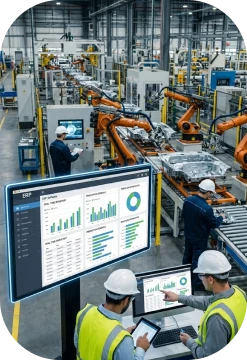
High part variations and frequent OEM design updates disrupt production stability, making it challenging to track revisions and deliver the correct version to the shop floor.
Production depends on calibrated tools and dies, but unplanned breakdowns and overlapping tool requirements disrupt schedules, create idle time, and reduce machine utilization.
Multi-stage processes make real-time data capture difficult, and without digital traceability, identifying quality issues or process problems becomes challenging.
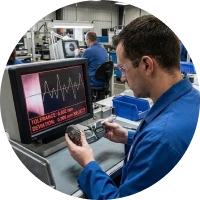
Minor deviations in dimensions or hardness can cause OEM rejections, while manual inspection cannot ensure accuracy at scale, leading to increased rework, scrap, and quality.
Without proper inventory management, high daily output creates overstocked WIP and finished goods, and limited floor space complicates storage and segregation, often causing mix-ups between approved and pending batches.
Frequent OEM order changes and seasonal fluctuations make it hard to plant production accurately, and manual scheduling cannot adapt fast enough to meet sudden demand spikes without straining machines and labour.
Disconnected systems across design, production, quality, maintenance, and dispatch create data silos, leading to miscommunication, duplicate entries, and slow decision-making due to lack of integrated systems.
Documentation module in ERP provides version-controlled documentation and ensures that only the latest design revisions are released to production.
Lighthouse ERP links tool availability and maintenance with production plans, reducing idle time, preventing tooling conflicts, and maintaining steady throughput even during high-volume operations.
Production module in ERP digitally tracks every component through all production stages, enabling instant backward and forward traceability essential for audits, warranty claims, and quality compliance.
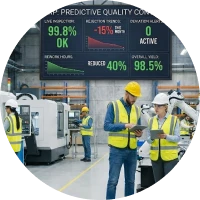
The ERP Software captures inspection data in real;-time, analyzes rejection trends, flags deviations, and enables predictive quality control to reduce rework and improve overall yield.
Supervisor accesses live data on machine utilization and cycle times, enabling dynamic work order reallocation based on load and downtime to optimize overall production throughput.
ERP syncs raw materials, WIP, and finished goods in real time, while barcode/RFID tracking ensures accurate segregation of approved, pending, and rejected items reducing errors and warehouse congestion.
Integrated process costing and machine-hour analysis provide precise part and batch cost visibility, helping managers identify cost leakages, improve pricing accuracy, and strengthen profit margins.
Maintain detailed product specifications including attributes, tooling requirements, and process groups ensuring precise control over every component variant.
Plan multiple similar products or semi-finished goods in a single work order to save time. Manage production at the work center and process level for optimized scheduling.
Define unlimited, process-specific BOM that reflect real manufacturing dependencies and ensure accurate routing and resource planning.
Capture production rates, process costs, and machine-hour capacity to achieve accurate cost analysis and margin visibility for every product line.
Easily reschedule job orders or combine multiple job cards in one process to improve productivity and minimize downtime.
Monitor process-wise and stage-wise status of every customer order under production for complete operational transparency.
Generate material procurement plans using past sales data and pending orders. Define minimum, maximum, and reorder levels for timely material availability.
Get precise order-wise and process-wise WIP reports, ensuring real-time visibility of material under process and completed goods.
Implemented process-level inspection and QC tracking for rejected, rectified, and accepted quantities to maintain consistent quality standards.