ERP for Weaving and Knitting Industry

ERP software for the Weaving and Knitting Industry

The textile business has specific business requirements from managing seasonal demand fluctuations and meeting precise order completion dates to optimizing processing capacities and controlling process variability caused by parameters like heat, moisture, and material quality. The sector is also embracing smart manufacturing, where IT-driven automation enables advanced design management and precise process planning.

Whether in weaving or knitting, Lighthouse ERP for discrete industry empowers textile businesses to streamline operations efficiently.

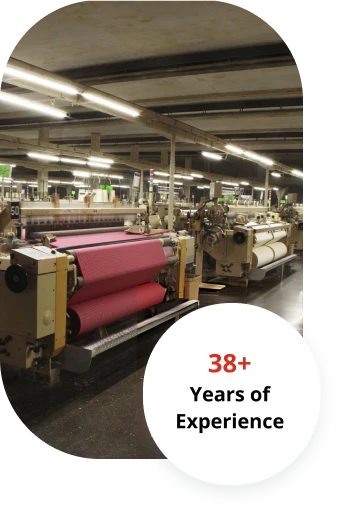
Lighthouse ERP for weaving and knitting companies is specifically designed to address the industry’s end-to-end operational needs. It provides an efficient, effective, and accurate way to manage textile processes. Since 1987, Lighthouse ERP has continuously evolved, delivering industry-specific, comprehensive, and robust solutions for the textile sector. Lighthouse’s technical expertise and precise mapping of key business requirements are the cornerstones of its success.

ERP for Weaving and Knitting Industry
lighthouseindia
lighthouseindia

Challenges of Weaving and Knitting Industry

Challenges End-to-End Process Visibility

Lack of End-to-End Process Visibility

Disconnected planning, production, quality, and maintenance systems hinder real-time data flow, leading to poor decisions on efficiency, downtime, and material usage, to avoid this integrated erp system is needed.

Challenges Frequent Product Mix

Frequent Product Mix and Design Variations

Rapid style changes, small batches, and custom orders require flexible setups, but manual changeovers cause setup errors, fabric inconsistencies, and higher rework costs.

Challenges Predictive Maintenance Gaps

Unmonitored Machine and Predictive Maintenance Gaps

Reliance on reactive maintenance without IoT based monitoring leaves issues like bearing wear or motor overload undetected, causing breakdowns and reduced machine lifespan.

Challenges Inefficient Production Scheduling

Inefficient Production Scheduling and Capacity Utilization

Due to multiple variables (machine type, yarn count, operator availability, batch size), most units struggle to plan optimal schedules.

Benefits of ERP for Weaving and Knitting Industry

Benefit IoT-Integrated Machine Monitoring

IoT-Integrated Machine Monitoring

Real-time sensor data on machine parameters enables predictive maintenance, minimizing breakdowns and improving overall equipment efficiency.

Benefit Yarn-to-Fabric Traceability

Yarn-to-Fabric Traceability

Digital tagging ensures end-to-end visibility of material movement, enabling quick root cause identification and enhanced quality control.

Benefit Smart Quality Contro

Smart Quality Control and Defect Analytics

AI-driven inspection and defect analytics improve first-pass yield, reduce rework, and ensure consistent fabric quality.

Benefit Process Parameters

Process Parameters , Waste Dashboards

Advanced ERP modules now integrate with IoT energy meters and waste parameters.

Features of Lighthouse ERP for Weaving and Knitting Industry

icon

Roll-Level Inventory & Barcode Traceability

Track fabric from raw material inward to finished goods dispatch using roll numbers and barcodes. Enables real-time visibility by lot, shade, lab dip, and production stage.

icon

Stage-Wise Bill of Material (BOM) Management

Manage BOMs across all production stages from raw fabric to semi-finished to finished goods. Automatically generate and link BOMs based on fabric attributes and variants.

icon

Production Planning & Job Card Scheduling

Plan orders with machine allocation, batch planning, supervisor tagging, and process routing. Create detailed job cards for roll issuance and track execution status across units.

icon

Process-Wise Production Monitoring

Control every step: Greige inspection, fabric turning, scouring, dyeing, drying, compacting, and final inspection with barcode-linked checkpoints and reprocess control.

icon

Quality Management & Lab Integration

Capture shade and color percentages, link lab readings to production, and monitor output quality during dyeing. Integrates with PLC/DCS systems for real-time production feedback.

icon

Real-Time Dashboard & Time-Action Tracking

Order-wise dashboards to track timelines of every stage, from fabric inward to final packing. Enables timely decisions and identifies process bottlenecks early.

icon

Sales, Dispatch & Export Management

Supports consignment sales, multi-level sales orders, delivery orders, and e-invoicing linked to weighslips. Manages export packing, pre- and post-shipment, and LC documentation.

icon

Financial Accounting & Cost Control

Division-wise financial books, inter-division transactions, subcontracting cost analysis, and detailed product costing with overhead and variance tracking.

icon

Advanced MIS & 10-Level Drilldown Reports

Powerful stock and financial reports with drilldown across entity → division → plant → department → item. Helps in fast, data-driven decision-making.

Frequently Asked Questions About ERP for Weaving & Knitting Industry

It's an ERP for companies engaged in fabric weaving and knitting that need to manage roll-level inventory, stage-wise production across greige inspection, scouring, dyeing, drying, and compacting, along with quality control linked to lab readings and machine parameters. The system supports both standard and custom orders and handles the frequent product mix and design variations that characterise this segment.

Fabric movement is tracked by roll number and barcode across every production stage, with lot, shade, lab dip reference, and production stage visible at any point. This roll-level traceability is what allows quality issues to be quickly isolated to a specific roll or batch without having to halt an entire production run.

Real-time sensor data on machine parameters — bearing temperatures, motor load, speed — feeds into the ERP's predictive maintenance function, flagging potential failures before they cause a breakdown. Integration with PLC/DCS systems also provides real-time production feedback and links lab shade readings directly to production records, reducing the manual data entry that introduces errors.

Production planning with machine allocation, batch scheduling, and supervisor tagging is set up for each run, and job card scheduling accounts for changeover time between different styles or constructions. The system reduces the setup errors and fabric inconsistencies that tend to happen when changeovers are managed manually with paper run cards.

It's a reporting structure that lets a user start from a high-level view — say, total stock across the entity — and drill down through division, plant, department, and item-group all the way to individual roll transactions. A manager querying why stock figures don't match can trace the discrepancy to a specific transaction rather than having to conduct a broader manual investigation.

Consignment sales, multi-level sales orders, delivery orders, and e-invoicing linked to weighslips are all managed within the system, alongside export packing, pre- and post-shipment documentation, and LC management. For weaving companies selling internationally, having this integrated with production and dispatch avoids the documentation gaps that commonly delay payments or create compliance issues at customs.