The Civil Engineering and Road Construction industry requires meticulous planning and execution, especially for projects like roads, bridges, dams, and water distribution networks. Managing on-site inventories, project expenses, and multi-location operations demands precision and control.
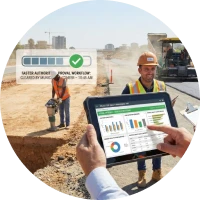
ERP software for civil engineering enables companies to efficiently handle multi-company and inter-company accounting, reconciliation, and real-time project monitoring. With a robust project management solution, construction firms can track daily expenses, progress against targets, and budgets for each project, ensuring timely completion and cost efficiency.
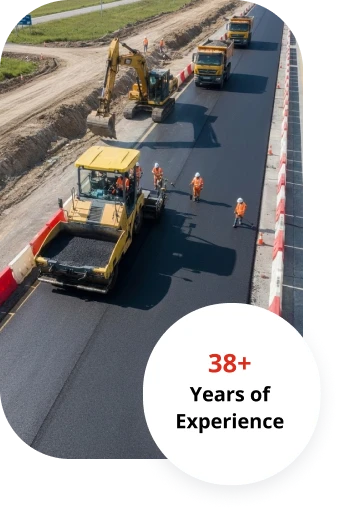
Lighthouse ERP for construction companies is specifically designed to address the comprehensive needs of the civil engineering and road infrastructure sector. Since 1987, Lighthouse has continuously evolved its software to stay aligned with industry demands, offering a reliable, industry-specific ERP solution for transmission projects, road building, and infrastructure development. The platform’s strength lies in its technical expertise and deep understanding of key construction requirements, making it a preferred choice for companies seeking accuracy, automation, and improved operational efficiency.

Tender-stage BOQs rarely reflect real site conditions such as soil variation, alignment changes, and rework. Manual quantity tracking affects hidden overruns and billing disputes that erode margins so to avoid this financial management system is necessary.
Highway projects run across long chainages and multiple packages with different resources and timelines. Lack of change-wise visibility leaves head office blinds to real execution progress.
Heavy equipment often operates without accurate utilization or fuel monitoring. Missing machine-hour-to-output linkage leads to fuel pilferage, idle time, cost leakage.
Road work relies on multiple subcontractors across earthwork and pavements layers. Annual measurements and delayed certifications trigger disputes and execution delays.
RA bills depend on scattered site data and slow approvals. Completed work fails to convert into timely cash, straining working capitals so a finance management is important.
Materials like aggregates, bitumen, cement, and steel lack yield tracking against executed work. Transportation and laying losses cause uncontrolled cost overruns.
NHAI, MoRTH, IRC, and PWD standards require continuous tests and documentation approval. Manual records delay audits, approvals, and often lead to penalties and rework.
Construction ERP maps BOQs directly to execution activities, enabling real-time tracking of executed versus tendered quantities. Early alerts on overruns help protect margins from the start of the project.
ERP tracks progress by chainage, stretch, or package, allowing planners to compare planned versus actual execution. Centralized dashboards provide true visibility across long highway projects.
Machine-wise deployment, hour tracking, and fuel reconciliation improve utilization and reduce theft. Preventive maintenance scheduling lowers breakdowns and unplanned downtime.
Digital measurement books linked to work orders generate subcontractor bills automatically based on executed quantities. Transparent tracking of advances, recoveries, and retention ensures smoother site execution.
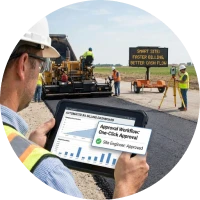
Site-level measurement capture and approval workflows accelerated RA bill preparation and submission. Shorter billing cycles directly improve project cash flow.
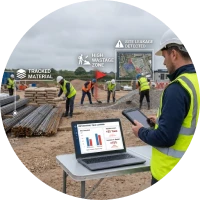
ERP software issues material against specific BOQ items and compares theoretical versus actual consumption. Leakage and wastage are identified by site or contractor, tightening control over high-value materials.
ERP centralizes quality test reports, cube results, and layer approvals and links them to execution stages. Instant access during inspections ensures zero compliance gaps and faster authority approvals.
Configurable BOQ structures with support for items, sub-items, rates, and measurement rules across roadwork activities.
Built-in support for chainage ranges, stretches, packages, and project segments as primary tracking dimensions.
System-based measurement recording with revision control, approvals, and linkage to certified quantities.
Rule-driven RA bill creation with support for running bills, retentions, deductions, and certification workflows.
Central registry for construction equipment with deployment history, ownership type, and maintenance attributes.
Material movement tracking by project, location, and work item, including batch and source references.
Structured storage of lab tests, field test results, layer approvals, and inspection records.
ESubcontractor agreements with rate schedules, scope definitions, and measurement-based billing controls.
Mobile-enabled data capture for measurements, inspections, and site records with offline operation and sync.