From Procurement to Commissioning: How ERP Streamlines the Solar EPC Project Lifecycle
It’s one week before a 5 MW project goes live. On paper, everything looks ready.
But reality? Total mess.
Inverters are stuck at the port because someone missed an update on WhatsApp. The person who got it isn’t even in the company anymore. Finance has already raised an invoice for work that’s not done. And the project manager is juggling angry client calls, outdated reports, and scattered Excel sheets.
If this sounds familiar, it’s because this isn’t rare — it’s everyday life for many Solar EPC teams.
Now imagine this instead: every team working on the same real-time data, no missed updates, no confusion. Everything connected.
That’s what a purpose-built ERP does — it brings everything together so projects actually run the way they’re supposed to.
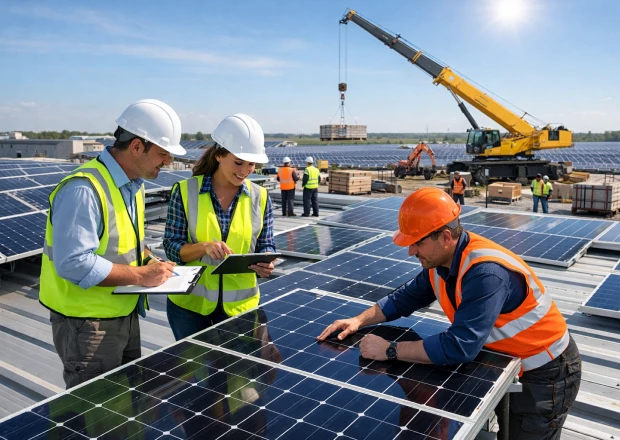
Understanding Solar EPC Lifecycle :
A solar EPC project moves through different stages; it is not a one-time setup. This project requires different teams to handle each stage, and each stage is dependent on the others. If a small error occurs in one stage, the whole process is affected.
It starts with pre-sales and estimation, and planning needs to be done before the project begins, where the team prepares cost estimates, BOQs, BOMs, and client proposals.
Then comes engineering and design, where layouts, technical drawings, and material details are finalised.
For the procurement stage, vendors are selected, purchase orders are created, and materials are arranged.
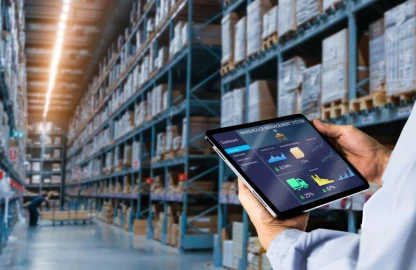
Next is logistics and warehouse, where materials are received, stored, and sent to different project sites while keeping track of stock.
Then the project moves to installation and execution, where work happens on-site—tracking daily progress, managing subcontractors, and completing milestones.
In the last stage testing, commissioning, and handover, the system is checked, issues are fixed, and the project is handed over to the client
In simple terms, every stage depends on the previous one. And if they are not well connected, delays and confusion are almost guaranteed.
Problems faced by the Solar EPC Industry when the ERP is not connected
Let us discuss what problems the solar EPC industry faces when the workflow or process is disconnected and how it impacts the business.
Procurement: Due to a lack of the latest stock update, procurement teams order extra material which remains unused, and money gets stuck in it.
Finance: The finance team send invoices based on old progress data, and if the work is delayed, it does not match the reality.
Scattered data: It becomes time-consuming for the manager to gather updates from WhatsApp, emails, and Excel files, and managing work becomes a challenge.
Subcontractor Management: Due to the absence of a proper system to track subcontractor delays and agreements, penalties are often missed even when vendors delay work.
Material Tracking: With no clear visibility of materials in transit, delivered, or consumed, unexpected shortages occur and delay the project.
Vendor Management: Since vendor performance is not tracked systematically, decisions are made based on guesswork instead of real data.
All these small issues slowly pile up — your profits start slipping, billing gets messy, projects run late, and clients begin to lose trust. And the worst part? It’s not just about lost time. It quietly hits your money and your reputation, too.
How ERP Connects Every Phase
A Solar EPC-specific ERP doesn't just digitise your existing processes — it integrates them. Here's what that looks like across each lifecycle phase:
a. Pre-Sales & Estimation
Auto-generate Bills of Quantity (BOQ) and Bills of Material (BOM) from standard project templates, saving days of manual effort per bid. Pull historical cost data from completed projects to make bid pricing sharper and more defensible, which reduces both under-quoting and padding risk. Version-control your proposals so that when the scope changes (and it always does), the revised estimate is immediately traceable.
b. Engineering & Design
Track drawing revisions within the system. Every version is logged, every change is timestamped, and field teams always access the current approved drawing. Link material specifications directly to procurement orders so that what engineering specifies is precisely what gets ordered. No manual translation errors. Manage RFI (Request for Information) cycles between design and client teams without leaving the platform.
c. Procurement & Vendor Management
Create Purchase Orders with multi-level approval workflows so no significant spend happens without authorisation.
Easy to compare vendors across price, delivery history, and quality rating, which improves decision-making.
Maintain rate contracts for repeat vendors so that every reorder is automatically priced correctly, which avoids renegotiation and scope for error.
d. Logistics & Inventory
With solar ERP, tracking every material movement in real time from vendor dispatch to warehouse receipt to site consumption becomes easy, and it also allows a digital audit trail at every stage. With a single dashboard, it is possible to manage inventory and identify surpluses at one site that can be reallocated rather than reordered.
e. Execution & Site Management
Field teams submit daily progress reports directly from mobile no need of paper and no lag, milestone will be updated in real time across project dashboard. Using ERP Software allow Issue subcontractor work orders within the platform and track completion against agreed timelines; delay penalties are automatically flagged and calculated. Project managers see a live view of what percentage of each milestone is complete, what's at risk, and what decisions need to be made today.
f. Testing, Commissioning & Handover
Manage all list like digitally items raised, assigned, and closed within the system, with photographic evidence and timestamps attached. Store all commissioning certificates, test reports, warranties, and O&M manuals within the project record for instant retrieval during handover or audit. Generate the final structured documentation set directly from ERP.
The Finance & Compliance Layer
For Solar EPC companies in India, compliance isn’t something you can treat as backend work — it’s part of everyday operations. A good ERP takes that pressure off by automating it.
Milestone Invoicing
Invoices get generated as soon as a milestone is approved — no follow-ups, no missed billing.
GST & TDS
Tax handling becomes simpler with GST calculations, TDS deductions, and e-invoicing all managed in one place.
Retention Money
Retention amounts are properly tracked against payment terms and released when milestones are signed off — no confusion.
Live P&L
You always have a clear view of project profitability — budget vs actual — across every cost head, anytime.
Everything is recorded and organised from day one. So when a client, investor, or tax authority asks for details, you’re not scrambling — you can share reports instantly.
That’s not just efficiency; it shows your business is in control.
Results You Can Expect with ERP
If you are moving to any ERP Software be it Manufacturing ERP or a Solar EPC-focused ERP isn’t just about changing software, it is the way of upgrading your business and improving the way business runs.
When companies shift from scattered tools to one connected system, the difference shows up quickly. Procurement becomes faster, billing issues are reduced, projects are delivered on time more often, and teams spend far less time chasing updates or making reports.
Simply put, everything becomes more organised and predictable. You get better control, clear visibility, and smoother execution across the entire project — which means faster delivery, better margins, and more trust from your clients.