Process Manufacturing ERP Vs Discrete Manufacturing ERP: Know the difference
If you have started researching ERP software for manufacturing business, you have probably noticed something: the options are overwhelming, and everyone seems to claim their platform can do it all. But here is the truth most vendors will not lead with — not every manufacturing ERP is built for every type of manufacturer. The system a paint company needs looks nothing like the one an automotive parts supplier requires, and implementing the wrong one will cost you far more than the software itself.
At the heart of this divide sits a single, critical distinction: process manufacturing versus discrete manufacturing. Once you understand what separates these two production models, the ERP decision becomes significantly clearer. This article walks you through both — plainly, practically, and without unnecessary complexity.
Two Production Models, Two Different Worlds
Before comparing software, it is worth being precise about what distinguishes the two manufacturing models, because this distinction drives every feature, workflow, and compliance requirement in the ERP systems designed to support them.
Discrete Manufacturing
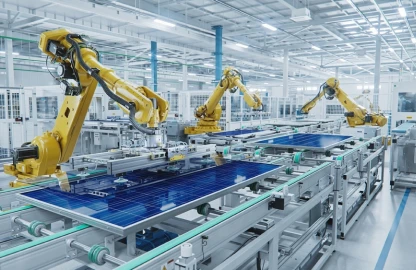
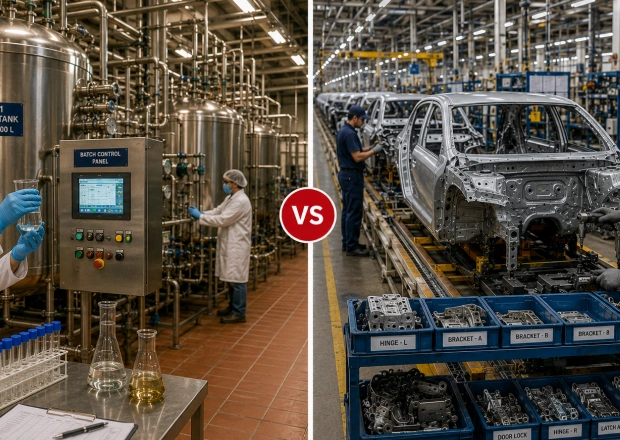
Discrete manufacturing produces individual, countable items assembled from separate components. A commercial refrigerator is built from a compressor, steel panels, electrical wiring, and a control board. Each finished unit is distinct, identifiable by a serial number, and — critically — can be disassembled back into its component parts.
Automotive manufacturing, electronics, industrial machinery, aerospace components, and consumer appliances all operate on this model. Production is driven by a structured list of components known as a Bill of Materials, and every part must be available, in the right quantity, at the right time.
Process Manufacturing
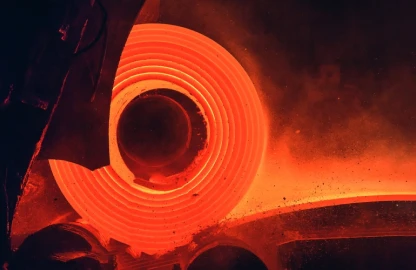
Process manufacturing works differently. It combines raw materials or ingredients — through blending, heating, reacting, or fermenting — to produce a finished product that cannot be un-made. Once you blend a pharmaceutical compound or brew a batch of beer, the original inputs are gone. The output is something entirely new, typically measured in litres, kilograms, or batch quantity rather than countable units.
Food and beverage, pharmaceutical, specialty chemicals, cosmetics, agrochemicals, and paints and coatings industries all work within this model. Production is governed by formulas and recipes, and traceability — knowing exactly what went into every batch and where it ended up — is non-negotiable.
This irreversibility, and the formula-driven nature of the production process, is precisely what makes process manufacturing so different from discrete — and why each demands a purpose-built ERP.
Process Manufacturing ERP: What It Does and Who It Serves
A process manufacturing ERP is built around recipe management, batch production, and regulatory compliance. The entire system is designed to handle the complexity of formula-based production, where a single change to an ingredient or a process parameter can affect quality, yield, cost, and compliance simultaneously.
The industries that depend on this model — food and beverage, pharmaceuticals, nutraceuticals, specialty chemicals, cosmetics — share a common set of operational demands that a generic ERP simply cannot meet out of the box.
Core capabilities you should expect from a process manufacturing ERP include:
- Recipe and formula management with version control, allowing production teams to manage multiple iterations of a formula and scale batch sizes without manual recalculation
- Batch traceability and lot tracking that follows every ingredient from supplier intake through production and into customer delivery — essential for product recalls and quality investigations
- Shelf life and expiry date management with automatic FEFO (First Expired, First Out) logic to minimise waste and maintain product safety
- By-product and co-product handling to accurately account for secondary outputs that arise from a single production run, affecting both costing and inventory
- Catch weight management for industries where products are purchased or sold by variable weight, such as meat processing or fresh produce
- Regulatory compliance modules supporting GMP, HACCP, FDA 21 CFR Part 11, and other standards that govern safe production practices
- Integrated quality and laboratory management enabling real-time testing and approval at every stage of the batch lifecycle
What separates a strong process manufacturing ERP software from a generic one is not the length of its feature list — it is how deeply these capabilities are integrated. When a food manufacturer needs to recall a contaminated product, the ERP must be able to identify every affected batch, every customer shipment, and every remaining unit in the warehouse within hours. That level of traceability has to be built in from the ground up.
Discrete Manufacturing ERP: What It Does and Who It Serves
A discrete manufacturing ERP is structured around Bill of Materials-based production planning, where every finished product is defined by a precise hierarchy of components and sub-assemblies. The ERP's job is to ensure that every part is sourced and available, every work order is scheduled and tracked, and every unit produced meets its specification.
Automotive, aerospace, industrial equipment, electronics, defence, and consumer goods manufacturers operate in this space. In these environments, shop floor visibility and materials planning accuracy are the difference between on-time delivery and costly production stoppages.
Core capabilities you should expect from a discrete manufacturing ERP include:
- Multi-level Bill of Materials management defining product structures down to the smallest sub-component, with support for variants and configurable products
- Material Requirements Planning (MRP) calculating what materials are needed, when they are needed, and triggering purchase orders or production orders accordingly
- Work order management and shop floor control tracking production progress and work-in-progress at each workstation, with real-time visibility of bottlenecks
- Finite and infinite capacity planning to optimise machine and labour scheduling and ensure delivery commitments are realistic and achievable
- Engineering change management enabling design revisions to be introduced in a controlled manner without disrupting active production orders
- Serial number and asset tracking critical in high-value and regulated industries such as aerospace, defence, and medical devices
- Configure-to-order and engineer-to-order support handling custom product specifications and one-off builds without creating chaos in the production schedule
In a discrete environment, the ERP is the nerve centre of the shop floor. When a supplier delivers a short shipment, the system should immediately flag the affected work orders, propose alternatives, and allow the scheduler to respond. That kind of responsiveness requires tight integration between procurement, planning, and production — and it needs to be native, not bolted on.
At a Glance: Process vs Discrete ERP
The table below summarises the key differences between the two ERP types.
| Feature | Process Manufacturing ERP | Discrete Manufacturing ERP |
|---|---|---|
| Production basis | Formula / recipe | Bill of Materials (BOM) |
| Output unit | Weight, volume, batch | Individual units / serial numbers |
| Reversibility | Inputs cannot be recovered | Components can be disassembled |
| Core industries | Food, pharma, chemicals, cosmetics | Automotive, electronics, machinery |
| Compliance focus | GMP, HACCP, FDA 21 CFR | ISO, engineering change control |
| Inventory tracking | Lot, batch, expiry date | Serial number, asset tag |
| Quality control | Batch-level lab testing | Unit-level inspection checkpoints |
| Production scheduling | Batch scheduling | Work order & capacity planning |
When You Are Neither One Nor the Other: Hybrid Manufacturing
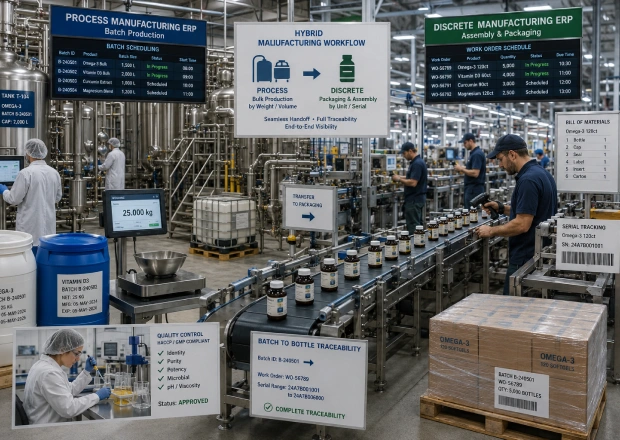
Many manufacturers do not fit neatly into either category. A nutraceuticals business may process active botanical extracts into a standardised compound, then assemble that compound into individually labelled capsule bottles. A craft brewery produces liquid through a process workflow but tracks kegs, casks, and canned units as discrete inventory items.
This is known as hybrid or mixed-mode manufacturing, and it is far more common than many assume. If your business operates this way, the ERP you select must support both production models natively — not through customisation or workarounds that become maintenance burdens over time.
When speaking with vendors, ask directly how their platform handles the handoff between batch-level process production and discrete packaging or distribution. A confident, detailed answer tells you the system was genuinely designed with this scenario in mind. Vague reassurances are a warning sign.
Before You Talk to Any Vendor: Questions to Clarify Internally
ERP selection projects that go wrong usually share one trait: the business did not have clear internal requirements before vendor conversations began. These questions help establish the foundation:
- Are your products made from formulas or recipes, or assembled from a defined list of components?
- Do you track raw materials and finished goods by batch, lot, or expiry date?
- Is your finished product measured in units, or in weight and volume?
- Are you subject to food safety, pharmaceutical, or chemical regulatory frameworks (GMP, HACCP, FDA, REACH)?
- Do product designs change regularly, requiring controlled engineering change processes?
- Is your production make-to-stock, make-to-order, configure-to-order, or engineer-to-order?
- Do your production runs produce by-products or co-products that require separate tracking and costing?
The answers to these questions will tell you — before any demo or discovery call — which category of ERP you need, and which capabilities should be non-negotiable in your evaluation criteria.
Common Mistakes Manufacturers Make When Selecting an ERP
ERP implementations have a well-documented history of delays, cost overruns, and disappointing outcomes. Most of these problems trace back to avoidable mistakes made during selection and planning.
- Choosing a generic ERP and customising it heavily: Deep customisation creates fragile systems that are expensive to maintain and increasingly painful to upgrade. Purpose-built manufacturing ERPs exist for good reason.
- Letting IT drive the selection without sufficient operational input: The people who manage production, quality, and compliance must define the requirements. Technology should serve the process, not define it.
- Underestimating data migration complexity: Moving item masters, BOMs, formula records, and historical lot data into a new system without structured data cleansing is one of the most common causes of implementation delays.
- Selecting for today, not for tomorrow: The ERP must be capable of supporting the scale and complexity of the business you are building, not just the one you operate today.
- Treating compliance as a secondary consideration: For pharmaceutical and food manufacturers especially, regulatory functionality must be a primary evaluation criterion — not a module to be added later.
Closing Thoughts
The choice between a process manufacturing ERP and a discrete manufacturing ERP is, at its core, a decision about how well your technology reflects the reality of your operations. No amount of configuration can turn a system designed for bolt-together assembly into one that reliably manages formula-based batch production — and vice versa.
A pharmaceutical business managing formulation versions, batch records, and regulatory audits operates in a fundamentally different environment from an electronics manufacturer handling multi-level BOMs, engineering change orders, and serial-numbered finished goods. Both need ERP. They do not need the same ERP.
Start with a clear understanding of your own production model. Define your compliance requirements early. Prioritise solutions that were purpose-built for manufacturers like you. When your ERP genuinely reflects how you make things, it stops being a system you manage and starts being a platform that drives your growth.