ERP Software For Electrical Equipment Industry
ERP for Electrical Equipment

ERP Software for the Electrical Equipment Industry

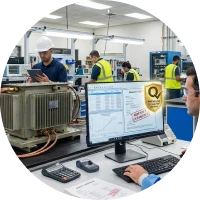
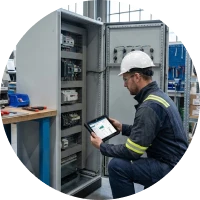
With nearly 85% of the electrical industry’s output driven by Transmission & Distribution equipment, manufacturers today are transitioning from traditional 220kV-400kV systems to advanced 756kV and high-voltage HVDC categories, demanding elevated precision in R&D execution, design standardization , production traceability, and compliance management, making ERP for Electrical Equipment Industry essential for digital transformation.

As product lines expand to include silicone composite and polymer insulators, disconnectors, surge arresters, switchgear assemblies, electrical control panels, distributions components, and metering units, the manufacturing ecosystem must support extensive configuration variability, multi-level BOM structure management, material engineering, rigorous QC testing, and lifecycle documentation aligned with IEC/IS utility testing standards.

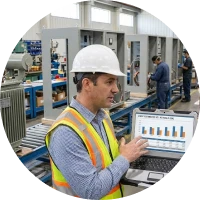
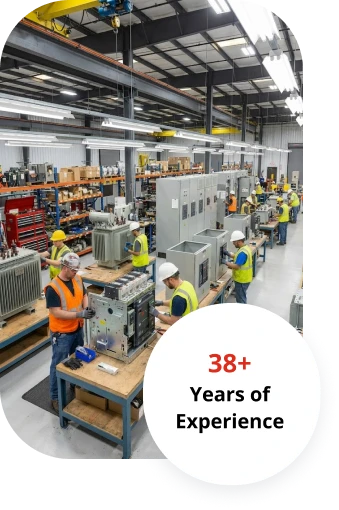
Lighthouse ERP for Power Distribution and Transmission Industry, built on domain experience since 1987, has evolved to map sector- specific complexities, integrating real-time shop-floor visibility, advanced planning algorithms, and quality-driven workflows. The system is designed to support high-voltage engineering environments, ensuring synchronized control over R&D, procurement, fabrication, assembly, testing, and field servicing, addressing the precision and reliability demanded by this sector.
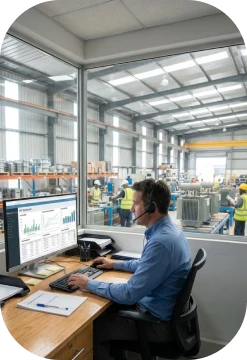
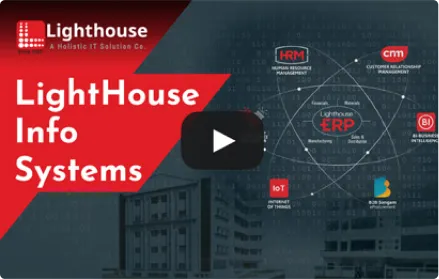
ERP for Electrical Equipment
lighthouseindia
lighthouseindia

Challenges of Electrical Equipment Industry

Challenges Engineering-Production

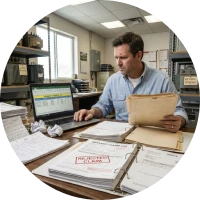
Engineering-Production Data Disconnect

Design revisions are not synced with production, resulting in outdated drawings, rework, and delays so a integrated system is necessary.

Challenges Certification Traceability Gaps

Testing & Certification Traceability Gaps

High-volume test data lacks centralized storage, making certificates hard to retrieve during audits, warranty claims, and inspections.

Challenges Material Critically

Material Critically & Uncertain Lead Times

Unpredictable supply for key materials of CRGO, copper, vacuum interrupters causes stockouts, production stoppages, and costly emergency analysis, so material requirement planning needs to be done accurately.

Challenges Field Service Data

Fragmented Project Execution & Field Service Data

Scattered installation and service information leads to spare parts delays, inaccurate AMC billing, and poor lifecycle performance analysis.

Challenges Warranty Cost Leakages

Warranty Cost Leakages and Claim Mismanagement

Manual claim tracking and lack of defect history visibility increase warranty expenses and escalate customer dissatisfaction.

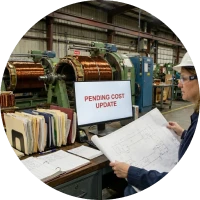
Challenges Lack of Real-Time Costing

Lack of Real-Time Costing for Multi-Stage Fabrication

Long manufacturing cycles lack real-time WIP costing, hindering deviation tracking and actual vs. estimated cost control.

Benefits of ERP For Electrical Equipment Industry

Benefit Production Synchronization

Production Synchronization with Revision Control

ERP connects CAD/PLM systems with production, auto-updates BOM and routing on revisions preventing rework and outdated design usage.

Benefit Dynamics BOM

Dynamics BOM & Product Variant Configuration

Rule-based BOM generation supports ETO/MTO customization (voltage class, cooling type, coil design, panel layouts) with faster configuration accuracy.

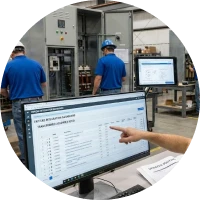
Benefit Quality Certification Management

Centralized Digital Test & Quality Certification Management

The quality management module captures real-time test data, auto-generates certificates, and links results with serial numbers for audits, inspections, and dispatch clearance.

Benefit Predictive Procurement

Predictive Procurement & Raw Material Optimization

Forecasts material demand (copper, CRGO, hardware) to avoid shortages and costly emergency purchase while improving supplier lead times.

Benefit Service Traceability

Complete Equipment Lifecycle & Service Traceability

Manage installation, AMC, warranty claims, spare parts, and field service history with IOT based health monitoring for long-life equipment.

Benefit Real-Time Costing

Real-Time Costing Across Each Manufacturing Phase

Tracks cost across each production stage and compares estimates vs. actual to improve budgeting accuracy and tender profitability..

Features of Lighthouse ERP for Electrical Equipment Industry

icon

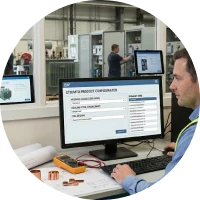
High Voltage Product Configuration

Supports detailed definition of voltage class, insulation type, and configurable variants ensuring precision for switchgear, insulator, arresters, and similar components.

icon

Multi-Level BOM Architecture

Unlimited BOM levels with routing and material alternatives to enable accurate planning, forecasting, and reduced wastage.

icon

Customizable Sales Order Specifications

Captures customer-specific parameters such as length, weight, tolerance, and packing requirements for zero-error order execution.

icon

Advanced Dispatched and Logistic Control

Drum-wise planning, cutting-based dispatching, and inspection scheduling to ensure shipment accuracy and compliance.

icon

Batch-Optimized Production Planning

Groups similar products into single work orders, reducing setup time and improving resource efficiency.

icon

Real-Time Production and Machine Tracking

Monitors machine-wise output, shift performance, rejection rates, and tool usage for enhanced shop-floor visibility.

icon

Quality Control & Standards Compliance

Process- level inspection aligned with IEC, ISm and utility standards, ensuring reliability and certification success.

icon

Barcode-Enabled Warehouse Management

Material and finished goods tracking across distributed warehouses to prevent stock imbalance and reduce costs.

icon

Production Costing & Work Center Efficiency

Real-time cost computation and efficiency analysis for better profitability and resource utilization.

icon

After-Sales & Warranty Lifecycle Management

Integrated warranty service calls, and spare parts tracking to improve customer support and uptime.