ERP for Paper Industry

ERP software for the Paper Industry

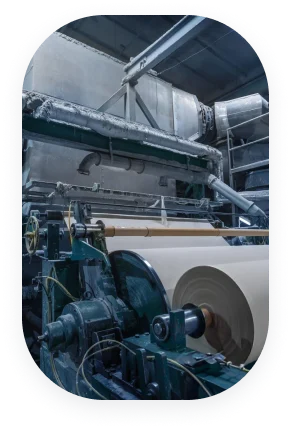
Paper mills work in a very demanding environment where precise management is required for the purchase of pulp and chemicals, large-scale inventory handling, continuous machine operations, and strict environmental regulations. Unlike other industries, the production of paper necessitates tracking of numerous GSMs, grades and finishes in order to maximize machine efficiency and minimize waste. These particular difficulties need a solution that is not only an ERP, but rather one that takes into account the realities of paper production.

Lighthouse ERP for the paper industry addresses these needs with an industry-specific ERP platform built for paper mills. This dedicated paper mill ERP software connects every function of the business starting from raw material procurement and production planning to inventory control, sales, and compliance reporting into one seamless system. This enables mills to maintain tighter control over costs, optimize capacity, and respond faster to customer demands.

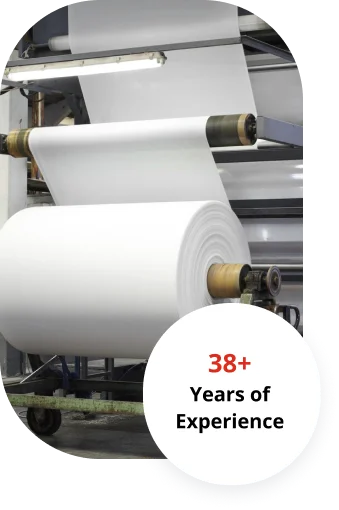
Lighthouse ERP brings 38+ years of proven expertise in delivering specialized ERP solutions. Its capacity to convert mill processes into digital workflows and its in-depth knowledge of them make it a dependable technological partner for paper manufacturers. They can rely on ERP solutions for paper manufacturing for efficiency, profitability, and long-term competitiveness.
ERP for Paper Industry
lighthouseindia

Challenges of Paper Industry

Challenges Inventory Pressure

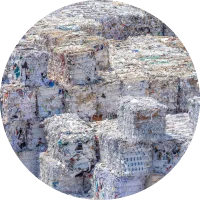
Raw Material Dependency & Inventory Pressure

Dependence on pulp, recycled paper, chemicals , and power, combined with storage of reels and rolls, often causes overstocking obsolete inventory, and waste with proper material planning it can be avoided.

Challenges Product Variation

Product Variation & Customization Complexity

Managing multiple grades, GSMs, coatings, and finishes is difficult with traditional systems, increasing risks of errors and delays in fulfilling custom orders.

Challenges High Trim Loss

High Trim Loss & Waste

Random cutting patterns create excess edge trims and leftover strips, causing direct loss of pulp, energy, and chemicals. Along with higher waste handling and recycling costs.

Challenges Production Planning

Inefficient Production Planning

Frequent changeovers due to uncoordinated order scheduling. Shorter runs cause Poor Machine Utilization

Challenges Contractor Inefficiencies

Limited Visibility & Poor Decision-Making

Data silos and manual reporting slow down decision-making, create coordination issues between departments, and increase the risk of errors, with manufacturing erp software it becomes easy.

Benefits of ERP for Paper Industry

Benefit Inventory Control

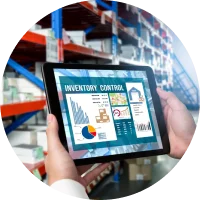
Smarter Procurement & Inventory Control

Tracks pulp, recycle paper, and chemicals in real time to optimize consumption, negotiate better supplier contractors, and maintain just-in-time inventory with paper ERP systems.

Benefit Flexible Product Configuration

Flexible Product Configuration

Supports multiple paper grades, GSMs, coatings, and finishes, enabling seamless coordination between sales and production for custom orders.

Benefit Production Efficiency

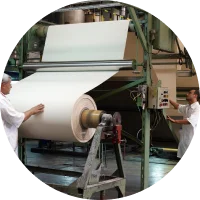
Production Efficiency

Reduces waste and improves machine utilization with streamlined workflows offered by ERP for paper manufacturing companies.

Benefit Flexible Production Scheduling

Flexible Production Scheduling

Balances customer promise dates with production line efficiencies, reducing the number of scheduled change overs.

Benefit Decision Support

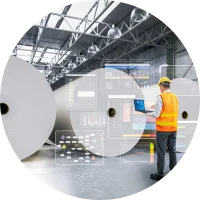
Real-Time Visibility & Decision Support

Provides dashboards covering procurement, production, quality, and sales, helping managers detect inefficiencies and act quickly with accurate, integrated data.

Features of Lighthouse ERP for Paper Industry

icon

Unit of Measure Flexible

Supports rolls, tons, and area-based measurement with automatic conversions across procurement, production, and inventory.

icon

Enhanced Cost Visibility

Offers precise cost tracking for accurate pricing and competitive quoting in price sensitive markets.

icon

Flexible Pricing, Rebates, and Commissions

Configures pricing and rebate structures by product, tier, or transaction, ensuring accuracy and profitability.

icon

Deckle Management

Optimizes order arrangement to minimize trim loss and leftover strips. Even a 1-2 % reduction saves significant costs at high volumes.

icon

Improved Machine Utilization

Enables longer production runs, reduces changeovers, and supports combined order processing without delays.

icon

Lot Traceability and Audit Control

Maintains full traceability of lots for compliance, quality assurance, and audit readiness with robust ERP for paper production capabilities.

Frequently Asked Questions About ERP for Paper Manufacturing Industry

Paper mills need to manage continuous machine operations, large-scale procurement of pulp and chemicals, and a huge variety of grades, GSMs (paper weights), and finishes — all while keeping waste and environmental compliance under control. A paper-industry ERP is built around these realities rather than treating a paper mill like any other factory.

Trim loss happens when cutting patterns aren't optimised, leaving excess edge trims and leftover strips that waste pulp, energy, and chemicals. ERP includes deckle management features that optimise how orders are arranged for cutting — and because paper mills operate at such high volumes, even a 1-2% reduction in trim loss can translate into significant cost savings over time.

Yes — flexible product configuration allows the system to handle multiple grades, GSMs, coatings, and finishes, with sales and production coordinated so custom orders are planned accurately rather than causing confusion on the shop floor.

By coordinating order scheduling more effectively, ERP enables longer production runs and fewer changeovers — since every changeover means lost production time. Combined order processing also helps avoid the inefficiency of running many short, uncoordinated jobs back-to-back.

Yes, the system supports rolls, tons, and area-based measurements with automatic conversions across procurement, production, and inventory — important because paper is bought, produced, and sold in different units depending on the stage and customer.

Full lot traceability is maintained throughout production, which supports compliance requirements, quality assurance investigations, and audit readiness — giving mills a documented trail if a quality issue needs to be traced back to a specific production lot.