Author

Ms. Apurva Khator


12 June, 2026 | 10 min Read


Download

Insights

  • Strong Growth: Global T&D equipment market is growing from ~$400B to ~$525B+ by early 2030s. India’s T&D market is set to double by 2033 (~8.5% CAGR).
  • Renewables-Led Demand: India’s grid expansion is driven by clean energy, with over 80% of power-sector investments tied to renewables and a 500 GW non-fossil target by 2030.
  • Heavy Capex Pipeline: Multi-trillion-rupee investments in transmission lines and substations through 2032 ensure sustained equipment demand.
  • Telecom Upside: 5G, FTTH, and smart cities are driving steady growth in towers and fiber/cables, led by Asia-Pacific and India.
  • Technology Shift: HVDC/UHV, smart grids, low-loss and SF₆-free equipment, and digital monitoring are becoming industry standards.
  • Key Risks: Utility financial stress, commodity volatility, regulatory delays, and supply-chain/geopolitical risks remain.

Executive Summary

The global Transmission & Distribution (T&D) manufacturing sector is entering a strong growth phase through 2030, driven by grid expansion, renewable integration, and digital infrastructure. The global T&D equipment market is expected to grow from ~$398 billion in 2025 to ~$526 billion by the early 2030s. India is a major growth engine, with its T&D equipment market projected to double by 2033 (~8.5% CAGR) on the back of large renewable targets, grid modernisation, and policy support. Adjacent segments such as telecom towers and fiber are also expanding rapidly due to 5G and FTTH rollouts. While challenges remain around utility finances and supply chains, continued government investment and technology upgrades are expected to sustain industry growth.

Industry Dynamics

  • Demand Drivers: Rising power demand from urbanization, industrial growth, EVs, data centers, and large-scale renewable projects is driving strong demand for high-voltage transmission, substations, and distribution equipment.
  • Market Growth: Global T&D equipment markets are expanding steadily (e.g., switchgear projected to reach ~$150B by 2030). India’s T&D market (~$25B in 2024) is expected to double by 2033, making it one of the fastest-growing globally.
  • Policy & Capex Push (India): Key drivers include the 500 GW renewable target, Green Energy Corridors, smart grid programs, RDSS reforms, and PLI incentives. Government-backed investments ensure sustained demand for transformers, conductors, towers, and switchgear.
  • Massive Project Pipeline: India plans to add ~115,000 ckm of transmission lines and ~776,000 MVA of substation capacity by 2027, with further large additions by 2032—requiring significant volumes of towers, cables, insulators, and accessories.
  • Industry Structure: The sector is concentrated, led by global and Indian majors (Siemens, ABB, GE, L&T, Adani, Schneider, CG Power). Raw materials such as steel, copper, aluminum, and insulation materials remain critical cost drivers.
  • Telecom Infrastructure Growth: Telecom towers and fiber demand are rising with 5G, FTTH, and Digital India. The global tower market is growing strongly, while India’s fiber cable market is expanding steadily through 2033.
  • Consolidation & Scale: Tower-sector consolidation and expanding urban and rural connectivity are boosting demand for cables, accessories, fasteners, and related hardware.

Sustainability and Environmental Responsibility

The T&D manufacturing industry is increasingly focused on sustainability, supported by clean-energy-led investments—around 83% of India’s power-sector spending in 2024 went toward renewables, storage, and grid infrastructure. Equipment is evolving with low-loss transformers, energy-efficient switchgear, and SF₆-free insulation technologies (vacuum, dry air, clean-air gas) as regulators push to phase out SF₆ due to its high global-warming impact. Electrification and renewables are also enabling smarter, more resilient grids, with grid-forming inverters, digital substations, and IoT-based monitoring reducing losses and outages. On the manufacturing side, producers are lowering carbon footprints through recycled copper and aluminum, eco-friendly cable materials, and life-cycle recycling of towers and cables. In India, long-term targets such as net-zero by 2070 and tightening environmental norms are accelerating the shift toward a greener, more efficient grid ecosystem.

Technology & Business Trends
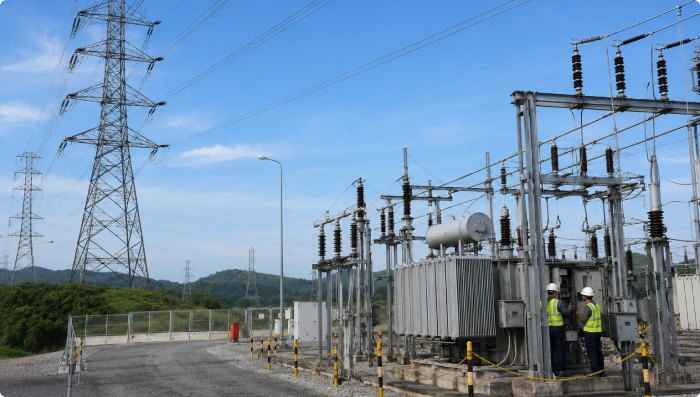
  • HVDC / UHV Expansion: High-voltage AC and HVDC systems are expanding to connect distant renewables, including ±800 kV corridors such as the 1,830 km Raigarh–Pugalur HVDC link, driving demand for advanced breakers, transformers, and compensation equipment.
  • Smart Grid Adoption: Digital substations, automated distribution, and SCADA-integrated switchgear are becoming standard, improving grid reliability and real-time control.
  • Advanced Materials: Composite and polymer insulators are increasingly replacing porcelain and glass, offering lower weight, higher durability, and reduced maintenance.
  • Energy Storage Integration: Substations are beginning to integrate battery energy storage systems (BESS), creating demand for new transformer, power-electronics, and charging interfaces.
  • Telecom & 5G Growth: 5G rollout and fiberization are accelerating demand for dense fiber backhaul; India’s data-center capacity is expected to double by 2026, boosting demand for bend-insensitive fiber and micro-cables.
  • Tower & Fiber Business Models:Growth of small cells, hybrid towers, and multi-operator infrastructure sharing is driving leasing-based tower models and sector consolidation.
  • Industry Consolidation: Large towercos and equipment suppliers are consolidating, while power–telecom partnerships are emerging to share infrastructure for smart grids and IoT networks.
  • Business & Manufacturing Shift: Governments are promoting local manufacturing through PLI and “Make in India”, while companies adopt automation, AI-driven maintenance, PPP models, and long-term service contracts.

Financial Outlook

The Transmission & Distribution (T&D) manufacturing industry is set for steady global growth, supported by long-term investments in grid expansion, renewable integration, and telecom infrastructure. Key global segments continue to scale: power transformer revenues are expected to increase from ~$30.4B in 2025 to ~$41.6B by 2030 (6.5% CAGR), while the global switchgear market is projected to reach ~$152B by 2030. Telecom infrastructure remains a parallel growth engine, with the global telecom cable market expanding from ~$52B in 2024 to ~$75B by 2035, driven by 5G, data centers, and broadband penetration.

India stands out as a major growth market. The Indian T&D equipment market (~$25B in 2024) is forecast to grow at 8–9% annually, led by grid strengthening and renewable energy integration. Segment-wise momentum is strong: switchgear is expected to grow from $4.09B in FY2025 to $6.80B by FY2033, power cables from $6.1B in 2024 to $9.5B by 2033, and telecom cables from $1.8B to $2.9B over the same period.

  • Capital Expenditure: India has committed ₹4.25T (2022–27) and ₹4.91T (2027–32) for transmission expansion, ensuring a robust, multi-year order pipeline for T&D manufacturers.
  • Profitability Trends: While margins remain exposed to commodity price fluctuations (copper, aluminum, steel), investments in automation, localization, and operational efficiency are improving cost competitiveness.
  • Key Risks: Financial stress among power distribution companies (~$75B cumulative losses and ~$9B in outstanding dues) continues to pose cash-flow risks for suppliers. Government-backed funding mechanisms and guarantees help mitigate risk, but working-capital management remains critical.

Overall, sustained capex, policy support, and rising infrastructure requirements position the T&D manufacturing sector for stable revenue growth with gradual margin improvement, with India emerging as a key long-term growth driver.
Investment Areas

  • Grid Expansion & Modernization: Investment in HVAC/UHVAC, HVDC corridors, smart substations, and distribution automation remains a top priority, driven by renewable evacuation and national grid plans (e.g., India’s 765 kV expansion by 2032).
  • Power Electronics & Digital Grids: High-growth areas include FACTS, advanced inverters, power-flow controllers, and battery energy storage at substations, offering higher-margin opportunities.
  • Telecom Infrastructure: Strong investment momentum in 5G towers, FTTH, and rural fiber networks (BharatNet) is driving demand for towers, antennas, microwave systems, and optical fiber.
  • Local Manufacturing: Government-led incentives, such as India’s PLI schemes for transformers and cables, are attracting private capital into domestic manufacturing and export-oriented capacity.
  • Renewables & EV Integration: Investments in renewable substations, grid-scale storage, EV charging infrastructure, and smart feeders are creating cross-sector demand for T&D equipment.
  • Technology & R&D: Rising funding in SF₆-free technologies, AI-driven grid management, and modular equipment design is enabling entry into premium, future-ready segments.

Risk Areas

  • Utility Financial Stress: Weak financial health of power distributors (~$75B losses; ~$9B dues in India) poses credit and payment-delay risks, especially in emerging markets.
  • Commodity & Supply Volatility: Fluctuations in steel, copper, aluminum, and silicon steel prices, along with supply-chain disruptions, can inflate costs and squeeze margins.
  • Regulatory & Execution Risk: Policy delays, right-of-way issues, tower siting restrictions, and evolving environmental norms (e.g., SF₆ reduction mandates) can slow project execution.
  • Technology Obsolescence: Rapid advances in HVDC, digital grids, and standards compliance require continuous R&D investment; laggards risk product obsolescence.
  • Macro & Geopolitical Factors: Currency swings, interest-rate changes, trade barriers, and geopolitical tensions can impact project financing and global supply chains.

Strategic Imperatives

  • Adopt Advanced Technologies: Invest in SF₆-free switchgear, high-efficiency transformers, IoT-enabled monitoring, supported by ERP-integrated Industry 4.0 manufacturing for real-time production, quality, and cost control.
  • Align with Renewables & Grid Resilience: Customize products for solar, wind, and grid-hardening needs to capture growth from clean energy and energy-security programs.
  • Localize & Scale Operations: Leverage PLI and “Make in India” incentives to build scale, reduce costs, and improve tender success; local manufacturing also supports exports.
  • Build Strategic Partnerships: Collaborate across power, telecom, and renewable developers, and engage early with governments for large grid and evacuation projects.
  • Expand into New Markets: Indian firms should target exports to fast-growing regions, while global players deepen presence through local alliances.
  • Strengthen Talent & Execution: Invest in skilled workforce, lean processes, and digital project management to reduce delays and execution risk.

Overall, success will depend on technology leadership, scale, and sustainability alignment, especially as India emerges as a global T&D manufacturing hub.

Key Takeaways

  • Strong Growth Ahead: Global and Indian T&D manufacturing markets are on a high-growth trajectory through 2030, with demand for transformers, switchgear, cables, and insulators rising sharply.
  • Renewables Drive Demand: Clean-energy targets and electrification programs (e.g., India’s 500 GW non-fossil goal) are fueling large-scale grid expansion across all voltage levels.
  • Telecom as a Parallel Engine: 5G, broadband, and fiberization are accelerating demand for towers, small cells, and fiber cables, creating synergies between power and telecom infrastructure.
  • Technology & Sustainability Matter: Adoption of HVDC, smart grids, advanced materials, and SF₆-free solutions is becoming a key differentiator, alongside green manufacturing and circular practices.
  • Policy & Funding Support: Strong government backing—such as India’s ~$109B grid investment by 2032—provides long-term demand visibility for manufacturers.
  • Risks Persist: Utility financial stress, commodity price volatility, and execution challenges require disciplined project management and risk mitigation.

Overall, companies that combine technology leadership, scale, and sustainability alignment will be best positioned to capture growth in the evolving T&D manufacturing landscape.