Strategic Analysis of the Global Metal Trading Industry
1. The Metal Trading Value Chain: An Overview
The global metal trading industry serves as a critical nexus where commodity cycles, international trade policy, and industrial demand converge. Its performance is a direct reflection of global economic health, influenced by sectors ranging from heavy industry to consumer electronics. This section deconstructs the industry's fundamental structure, from sourcing to sales, and evaluates the primary drivers shaping its growth trajectory.
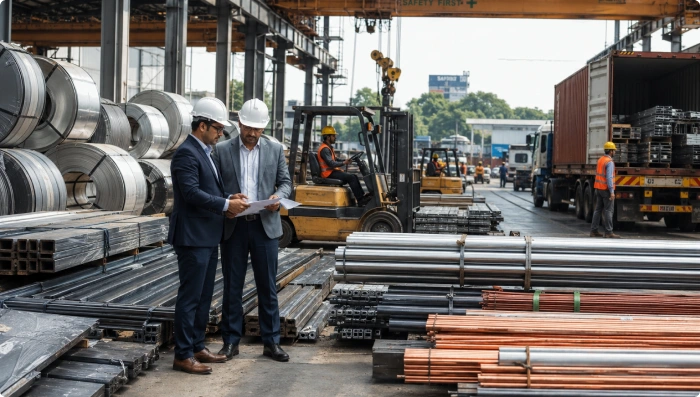
The metal trading value chain is a complex ecosystem beginning with the initial sourcing of raw materials—either through scrap metal collection or primary ore importation. Materials then move into specialized warehousing and logistics. The core value-addition occurs during processing, which encompasses a range of activities including crushing, melting, refining, and alloying. The final stage involves the sale of processed metals to industrial end-users, completing a cycle fundamental to the global economy.
The strategic outlook for the industry is shaped by several powerful and interconnected market drivers:
- Industrial Demand: The foundational driver is robust demand from key global sectors. Growth in construction and infrastructure, the expansion of the automotive and electric vehicle (EV) markets, and persistent demand from the electronics sector directly translate into increased consumption of base and ferrous metals.
- Electrification & Energy Transition: The global shift towards electrification and renewable energy is a significant structural tailwind, specifically boosting demand for industrial metals like iron, copper, and aluminum, which are essential components in green technologies, power grids, and electric vehicles.
- Sustainability & Circular Economy: Strategic focus must pivot towards the scrap market, whose expansion represents a significant structural shift in feedstock economics. Recycled metals significantly lower the energy intensity of production, helping traders and end-users meet increasingly stringent sustainability goals and participate in the circular economy.
- Financial & Geopolitical Factors: Unlike industrial metals, gold's market dynamics are dictated by its dual roles. It serves as a financial safe-haven asset, with its value driven by investor demand, central bank purchasing, and macroeconomic uncertainty. Concurrently, it has significant consumer demand from key end-users like the jewellery sector.
This overview of the value chain sets the stage for a more detailed analysis of the individual metals markets that constitute this dynamic industry.