ERP for Spinning and Textile Industry

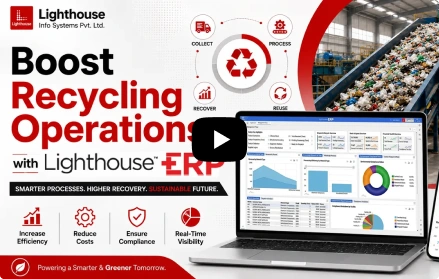
ERP software for the Recycling Industry

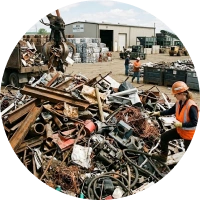
Recycling has quietly become one of the most demanding industries to run on paper and spreadsheets. A single facility might be shredding end-of-life vehicles one week, dismantling e-waste the next, and processing scrap copper, rubber, or mobile phone components the week after. Each material stream comes with its own intake process, its own grading rules, its own compliance paperwork, and its own recovery economics — and all of it has to be tracked from the moment a truckload of scrap enters the gate to the moment recovered material leaves as a finished, sellable commodity.

Lighthouse ERP for the recycling industry is built around that reality. Rather than forcing metal recyclers, e-waste processors, automobile dismantlers, and rubber reclaimers into a generic manufacturing template, it's designed around how recycling actually works — variable-quality inputs, multi-stream segregation, and output that has to be priced, certified, and traced back to its source. Since 1987, Lighthouse has been building industry-specific ERP solutions, and this recycling ERP brings that same depth to metal recovery, electronics and computer recycling, ELV (end-of-life vehicle) dismantling, tyre and rubber reclamation, and mobile device recycling — with full visibility across inventory, compliance, and financial management in one connected system.
ERP for Spinning and Textile Industry
lighthouseindia

Challenges of the Recycling Industry

Challenges Manual Operations and Delays

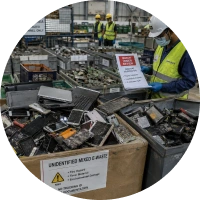
Inconsistent Quality and Composition of Incoming Scrap

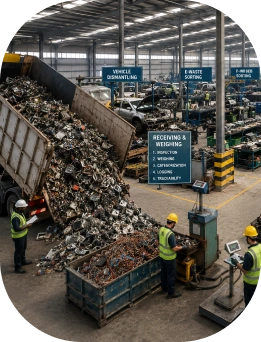
Scrap metal, e-waste, and end-of-life vehicles rarely arrive in a predictable state. Without intake grading, recyclers process unknowns. The result: inconsistent recovery yields and rejected batches.

Challenges Unreliable Business Information

Multi-Stream Material Segregation

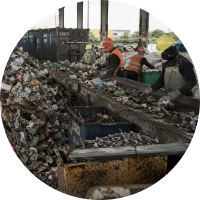
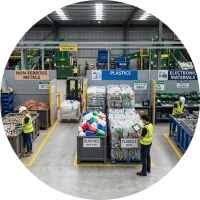
A single facility may handle ferrous metals, non-ferrous metals, plastics, rubber, and e-waste side by side. Tracking each stream manually is hard. Cross-contamination becomes a constant risk.

Challenges Financial Visibility

Traceability from Collection to Recovered Output

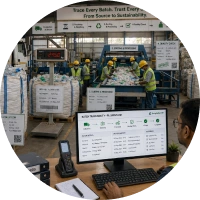
Regulators and customers want to know where recovered material came from. Without digital, batch-wise traceability, proving chain of custody becomes guesswork.

Challenges Communication Gaps

Hazardous Material and Compliance Tracking

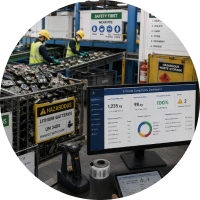
Electronics and mobile recycling involve batteries, circuit boards, and other regulated items. Manual tracking raises the risk of non-compliance — and the penalties that follow.

Challenges Lack of Material Traceability

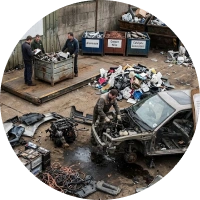
Dismantling and Recovery Rate Visibility

In ELV and appliance dismantling, profitability depends on actual recovery versus waste. Without real-time tracking, it's hard to know which jobs are truly profitable.

Challenges Lack of Material Traceability

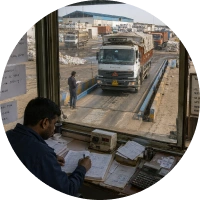
Weighbridge, Yard, and Gate Movement Control

Recycling yards see constant inward and outward movement — trucks, transfers, dispatches. Managing this manually leaves gaps that lead to material loss or billing errors.

Challenges Lack of Material Traceability

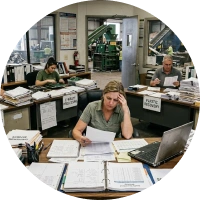
Fragmented Records Across Multiple Recycling Lines

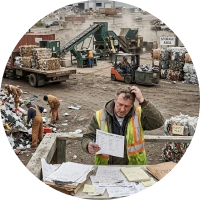
When each recycling line runs on separate spreadsheets, managers lose the consolidated view needed for timely decisions.

Benefits of ERP for the Recycling Industry

Benefit Lower Operational Expenses

Consistent Grading and Intake Quality Checks

Every incoming lot is graded and recorded at intake. Recovery planning starts with real data, not guesswork.

Benefit Real-Time Access

Clean Segregation Across Every Material Stream

Ferrous, non-ferrous, plastic, rubber, and electronic streams are tracked separately. Cross-contamination drops, and each process runs on its own workflow.

Benefit Financial Reporting

End-to-End Batch and Source Traceability

Every batch carries a digital trail from scrap yard to finished output. Useful for audits, compliance checks, and quick issue isolation.

Benefit Integrated Seamless operations

Built-In Hazardous Material and Compliance Controls

Regulated components in e-waste and mobile recycling are flagged and tracked automatically. Staying audit-ready takes far less manual effort.

Benefit Smart SKU

Recovery Yield Visibility by Batch and Process

Recovery rates are captured in real time. Plant managers see exactly which streams and processes deliver the most value.

Benefit Smart SKU

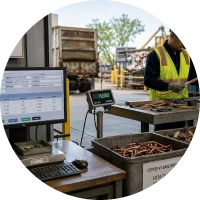
Integrated Gate, Weighbridge, and Yard Management

Inward receipts, weighbridge readings, transfers, and dispatches are all logged in one system. Material and billing gaps close on their own.

Benefit Smart SKU

One Consolidated View Across All Recycling Lines

Metal, electronics, ELV, rubber, and mobile recycling all run in one system. Leadership gets a real-time, plant-wide picture instead of scattered reports.

Features of Lighthouse ERP for the Recycling Industry

icon

Multi-Stream Production Planning & Control

Plans and schedules processing across metal, e-waste, automobile, rubber, and mobile lines. Tracks standard versus actual recovery for each batch.

icon

Scrap & Raw Material Intake Management

Records every inward lot by weight, grade, source, and material type. Godown and yard-level control form the base for accurate inventory management.

icon

Batch-Wise Traceability & Source Linkage

Links every recovered output back to its originating scrap lot or dismantled unit, along with quality and compliance certificates.

icon

Dismantling & Disassembly Process Tracking

Captures part-by-part recovery data for ELV and electronics dismantling — reusable parts, recoverable metals, and waste fractions.

icon

Quality Control & Hazardous Material Flagging

Integrates lab and inspection data with production records. Flags regulated components in e-waste and mobile streams for compliant handling.

icon

MIS for Recovery Performance & Costing

Generates plant-level reports on recovery rate, cost per batch, material yield, and profitability across every stream.

icon

Comprehensive Yard & Logistics Visibility

Tracks gate entries, weighbridge transactions, internal transfers, and outward dispatches — strengthening logistics control across the yard.

icon

Financial Integration & Divisional Costing

Delivers division-wise costing, ledger tracking, and profitability analysis across recycling lines under one facility.

icon

Purchase, Billing & Approval Automation

Automates scrap purchase billing, freight costs, and job-work billing through structured approval workflows.

icon

Sales Order to Dispatch Management

Covers the full sales cycle for recovered material — enquiry, quotation, order, dispatch, and invoicing — with grade-wise pricing and credit control.

Frequently Asked Questions About ERP for the Recycling Industry

It's an ERP designed around how recycling plants actually operate — scrap and e-waste intake, dismantling, material segregation, recovery processing, and dispatch of recovered commodities — combined with the inventory, compliance, and finance functions that connect those activities. It's built to handle multiple material streams (metals, electronics, ELVs, rubber, mobile devices) within a single system rather than treating each as a separate process.

Every inward lot is graded and recorded at the point of intake, so the system captures material quality data before processing begins. This gives planners accurate information to work with instead of relying on assumptions, which helps reduce inconsistent recovery yields downstream.

Yes. Each material stream is managed through its own defined workflow within the same platform, so ferrous and non-ferrous metals, electronics, end-of-life vehicles, and rubber can all be processed and reported on separately without needing disconnected tools for each one.

Every batch is digitally linked from the original scrap or dismantled unit through to the finished recovered output, along with any quality checks along the way. If a customer or auditor needs to verify the source of a material, the record is already there rather than needing to be reconstructed after the fact.

Regulated items such as batteries and circuit boards are flagged as they move through the system, and the ERP maintains the records needed to demonstrate compliant handling and disposal. This reduces the manual tracking burden that typically comes with e-waste regulations.

Yes — recovery data is captured at the batch or unit level, showing how much usable metal, parts, or material was recovered against what was processed. This gives plant managers visibility into which dismantling jobs are actually profitable.

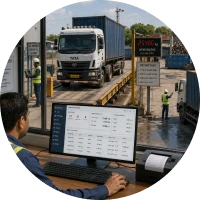
Gate entries, weighbridge readings, and internal yard transfers are all logged within the system as they happen, rather than reconciled later from paper slips. This closes the typical gaps where material quantities or billing don't match up.

Yes. Purchase and sales pricing for recovered metals and other materials can be linked to current market rates, helping recyclers price scrap purchases and finished material sales more accurately as markets move.