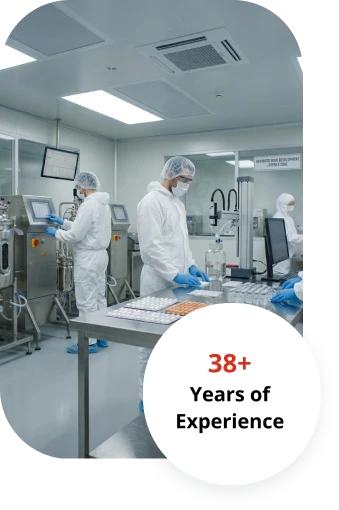
The Pharma sector operates under some of the strictest regulatory standards, with continuous updates and frequent shifts in compliance requirements. To stay competitive, companies update and frequently shift in compliance requirements. To stay competitive, companies must not only meet these evolving guidelines but also maintain seamless operational workflows across every department. Over the last decade, rising competition and increasing market pressure have pushed pharma organizations to modernize their processes and elevate operational efficiency.
This environment has accelerated the adoption of ERP solutions specifically tailored for pharmaceutical operations. A robust pharma ERP system streamlines end-to-end processes, improves visibility into sensitive workflows, and ensures complete adherence to industry regulations. From expiry management and quality control to formulation, costing, and compliance tracking, ERP platforms have become indispensable for managing the complex ecosystem of pharmaceutical business.
Lighthouse ERP stands out as a comprehensive solution built to address these unique challenges. Designed with modular architecture and deep industry relevance, Lighthouse ERP enables seamless integration between departments, real-time data accessibility, and informed decision-making across the enterprise. Its interconnected modules create a unified digital backbone, empowering pharmaceutical companies to maintain accuracy, efficiency, and compliance in every operation.

Delays in QC clearance, stability results, or temperature logs can halt production, packaging, or dispatch, stalling the entire plant so a integrated manufacturing erp systems is necessity.
API potency changes, yield fluctuations, and exact material tracking demand strict accuracy, with every deviation requiring justification.
Expiry and retest dates change with ongoing stability results, affecting inventory, QC planning, and causing potential write-offs.
Detailed, traceable investigations are required for deviations and OOS/OOT events, and incomplete documentation risks batch rejection.
Incorrect or missing entries in BMRs or logbooks can stop batch release and trigger compliance issues during audits, with document management module it gets easy.
Paper-based processes lead to untraceable edits, missing audit trails, and regulatory vulnerability.
Companies must reduce QC turnaround and validation time without compromising compliance, creating ongoing operational strain.
ERP software links QC, QA, production, warehouse, and planning, giving instant visibility into material status, in-process stages, and dispatch readiness, removing problems and preventing plant-wide delays.
With controlled formulation data, automated potency adjustments, and precise material tracking, ERP makes sure that accuracy yields and reduces deviation risks throughout the production cycle.
Pharma ERP updates expiry and retest dates dynamically, sends alerts for nearing limits, and integrates stability results into planning, preventing expired material use and minimizing write-offs.
Quality management in ERP standardizes deviation, OOS, OOT, and CAPA workflows with traceable, structured documentation, reducing investigation delays and ensuring compliance-ready quality records.
By digitizing BMR/BPR, validation records, and logbooks with secure access and resignatures, ERP ensures accurate, audit-complaint documents and avoids batch release disruptions.
ERP for pharma enforces ALCOA+ principles with audit trails, version control, and time-stamped entries, preventing unauthorized edits and strengthening regulatory defensibility.
Through automated QC sample QC sample handling, COA integration, and real-time QA workflow linking, manufacturing ERP software shortens batch release timelines critical for high-volume and CDMO driven operations.
ERP platforms for pharma offer a clean, easy-to-navigate interface that simplifies daily tasks for users across QA, QC, production , stores, and planning, reducing training time and improving adoption.
Pharma ERP ensures high-level data protection through controlled access, encrypted storage, and automated backups, safeguarding critical records like BMR/BPR, COAs, and audit logs from loss or tampering.
Cloud-enabled ERP gives pharma teams the ability to monitor processes, approve requests, view dashboards, and manage expectations remotely ensuring operational continuity even outside the facility.
The ERP connects production, QA, QC, warehouse, purchase, sales, and finance, enabling seamless information flow. This integration eliminates silos, accelerates decision-making, and synchronizes production activities.
With integrated dashboards and live tracking, pharma companies gain insight into batch progress, raw material status, QC results, and inventory levels improving responsiveness and operational accuracy.
ERP digitizes MFR/BMR, SOPs and QA documents, ensuring accuracy, quick retrieval and compliance with CDSCO, Schedule M, and WHO GMP standards.
ERP forces secure audits trails, version control, and time-stamped entries preventing unauthorized edits and ensuring full regulatory compliance during inspections.
ERP automates QC sampling, links COAs, tracks deviations in real-time, and syncs production with QA clearance significantly speeding up batch release for high-volume and time-sensitive operations.