ERP for the Plastic Manufacturing Industry: What Actually Works — and What Most Manufacturers Get Wrong
Most plastic manufacturers in India are not struggling because their markets are bad or their operations are weak. They are struggling because the tools they use to run their business have not kept pace with the business itself.
Think about what a mid-sized injection moulding or pipe manufacturing unit is managing on any given day: multiple active moulds, several polymer grades, tight delivery windows from Tier-1 customers, quality certificates that need to be traceable to specific material lots, GST-compliant invoicing, and a finance team waiting on production data to close the books. That is not a simple operation. It is a complex, interdependent system — and it deserves tools built to match.
Yet, across the industry, the answer to that complexity is still a patchwork of Excel sheets, WhatsApp updates, and clipboards. Not because manufacturers do not see the problem — most do, clearly — but because they have not yet found the best ERP for manufacturing industry that speaks the language of their specific process. Generic software does not cut it. What plastic manufacturers need is a system built around how injection moulding, PVC pipe production, woven sack manufacturing, or rotomoulding actually works.
This article is about that gap — what it costs, how ERP closes it, and what separates implementations that work from those that do not.
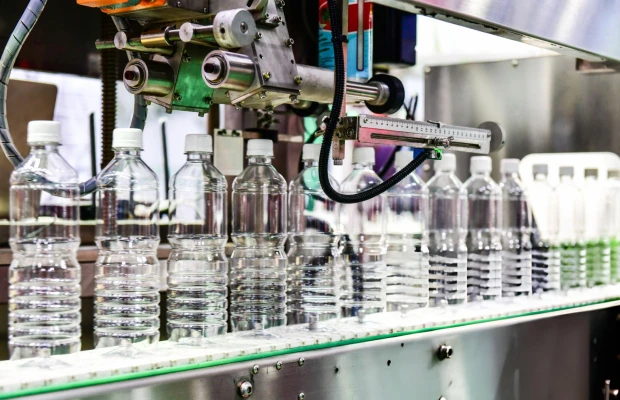
Why Plastic Manufacturing Is More Complex Than It Looks
People outside the industry often assume it is straightforward — melt material, fill a mould, ship a product. The reality is quite different.
A single injection moulding plant producing automotive interior trims might be managing dozens of active moulds, each with its own cycle time, tonnage requirement, cavity count, and maintenance history. Add multiple polymer grades — PP, ABS, PA6, PC/ABS blends — from different suppliers, each with different processing parameters. Add colour masterbatches, where even a small deviation in percentage can cause a customer rejection. Add just-in-time delivery windows for Tier-1 auto clients, where a day's delay can trigger a line-stoppage penalty. Add the machine-specific constraint that a 650-tonne press simply cannot run a job designed for a 250-tonne machine, regardless of availability.
Now layer in scrap tracking, regrind percentages, quality certificates, GST-compliant invoicing, and monthly finance reporting — and it becomes clear why spreadsheets are not just inconvenient in this environment. They are genuinely risky.
One manufacturer we worked with discovered, after going live on ERP, that they had been underquoting on a product line for over two years. Their manual cost tracking had been missing machine-hour costs entirely. They were growing revenue and quietly shrinking margins at the same time. It took ERP to surface that reality.
What ERP for Plastic Manufacturing Actually Does on the Ground
Most ERP brochures list modules. What matters more is what those modules actually do inside a plastic manufacturing operation.
Production Planning That Reflects Real Constraints
Good planning here is not about scheduling jobs — it is about scheduling the right job, on the right machine, with the right mould, at the right time, given available material and current maintenance status.
In Lighthouse ERP with a production planning module, production plans are built around machine-mould-material combinations. When a sales order comes in, the system checks whether the mould is available, whether the required tonnage machine is free, and whether raw material is in stock — before the planner commits a delivery date to the customer. Not after. This sounds like basic common sense. It is precisely what most plastic manufacturers cannot do today.
Inventory That Handles the Way Plastics Actually Move
Polymer is bought by the kilogram but consumed by shot weight. Regrind from rejected parts re-enters production at a controlled percentage. Masterbatch is used in small quantities that still need accurate costing. Finished goods might be stored by weight in one area and by piece count in another.
Standard inventory systems handle this poorly. A well-configured plastic manufacturing ERP handles all of it — regrind tracking, lot-wise batch management, automatic material issue against Bills of Materials. One of our customers in the pipe fittings segment reduced raw material write-offs by over 18% in the first year, simply because ERP made actual consumption visible against theoretical consumption. They had been losing material in the process for years with no way to find it.
Quality Control That Creates Traceability, Not Just Records
Any plastic manufacturer supplying automotive or pharma customers knows this situation: a customer calls weeks after delivery to report a dimensional failure. They want the material lot number, the machine, the mould, the operator, the processing parameters, and whether other batches from the same run are in the field.
With manual systems, answering that takes days — if it can be answered at all. With ERP, it takes minutes. Every production order carries its full genealogy: material lot, machine, shift, and customer order. One screen, complete picture.
Beyond traceability, the quality management module supports in-process inspection, incoming material testing, and digital sign-off on finished goods. Non-conforming material is quarantined automatically. Over time, rejection analysis shows whether a quality problem is tied to a specific material, machine, or process.
Costing That Shows You the Truth About Each Product Line
Job costing in plastic manufacturing needs to account for material (including regrind credit), machine hours at actual rates, labour, mould depreciation, quality costs, and overheads. Most manufacturers know their overall profit but cannot tell you which product lines are actually making money and which ones are quietly subsidised by the rest.
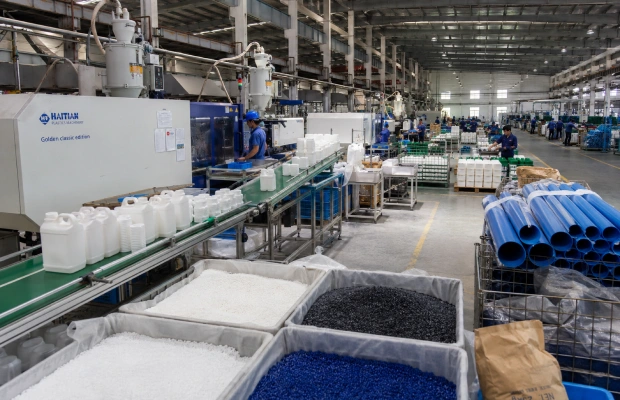
Manufacturing ERP calculates actual production cost per job and compares it against the standard cost at the time of quoting. Variances surface immediately. Over months, this becomes the foundation for better pricing, smarter product mix decisions, and honest conversations with customers when resin prices spike.
The Mistakes That Derail ERP Implementations (And How to Avoid Them)
After watching both successful and failed implementations, these are the patterns worth knowing before you start.
Choosing generic ERP and trying to customise it for plastics
Generic ERP is not built with injection moulding or extrusion logic in mind. You end up paying for expensive customisation to reach a baseline that a specialist system already has out of the box.
Going live without cleaning up master data first
ERP is only as good as the data inside it. If your material codes are inconsistent, your Bills of Materials are outdated, and your customer list has duplicates, the ERP will automate that chaos rather than fix it.
Launching all modules at once
A phased approach — typically starting with production and inventory, then moving to finance and quality — reduces the learning curve and lets your team build real confidence before the full system is live.
Underinvesting in training
The biggest predictor of ERP implementation success is not the software. It is whether the people using it understand why they are using it and what to do when something does not go as expected.
Treating ERP as an IT project
If the plant manager and business owner are not directly involved in implementation decisions, the ERP gets configured around old ways of working rather than better ones. That defeats the purpose.
What the First Year Actually Looks Like: A Realistic Timeline
ERP expectations tend to swing between too optimistic and too pessimistic. Here is a realistic picture of the post-implementation journey.
Months 1–2:
Stabilisation. The team is learning the system, data is being corrected in real time, and some processes will feel slower than before. This is normal. Resist the urge to revert to spreadsheets.
Months 3–4:
Early wins become visible. Inventory accuracy improves noticeably. Production schedules are easier to communicate across teams. Finance gets the data they need faster.
Month 6:
Costing data becomes reliable enough to actually inform pricing decisions. Quality rejection trends become visible and actionable.
Months 9–12:
The compound benefits are clear. On-time delivery improves, inventory holding reduces, and management reporting shifts from looking backwards to looking forwards.
A woven sack manufacturer in Gujarat put it simply: "I used to walk into customer meetings guessing. Now I walk in knowing." That shift — from guessing to knowing — is what ERP is really about.
The Bottom Line
Running a plastic manufacturing business in India today is genuinely harder than it was a decade ago. Raw material prices are volatile. Customer expectations — on quality, traceability, and delivery — are higher. Competition from larger organised players is intensifying.
The manufacturers who scale successfully in this environment are the ones who have replaced gut feel with data, manual tracking with automation, and departmental silos with integrated operations. That is not a technology argument. It is a business one.
Whether you make injection moulded components, PVC pipes, plastic tanks, woven sacks, FIBC bags, or packaging films — if core operations still run on spreadsheets, the gap between what you can see and what you need to see is probably costing you more than you realise.
Lighthouse ERP has been working with Indian manufacturers for over a decade. To see what your operations look like through a system built specifically for your industry, request a free demo at lighthouseindia.com.