12 Proven Benefits of ERP in Manufacturing Industry
Manufacturing has always been complex — but the pace at which things can go wrong has never been faster. A raw material shortage, an unplanned machine breakdown, a missed delivery — any one of these can set off a chain reaction that costs time, money, and customer trust. The question is not whether these problems will occur. It is how quickly and effectively a business can see them coming and respond.That is precisely where ERP earns its place. The global manufacturing ERP market stands at $23 billion in 2025, with 47% of all new ERP implementations globally happening in manufacturing. It is the most ERP-invested industry in the world — and the results explain why. A 2024 industry survey found that 95% of businesses reported measurable improvement after ERP adoption. Those are not marketing numbers. They reflect what happens when an entire operation starts working from the same data, in real time.
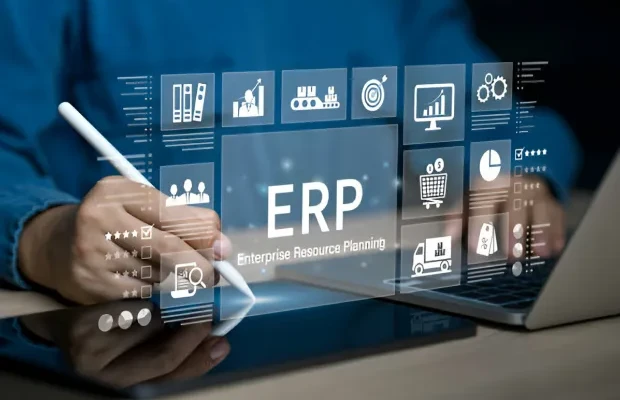
Here are the 12 benefits that make ERP indispensable to manufacturers — and the evidence to back each one up.
1. Real-Time Visibility Across Every Corner of the Operation
Most manufacturing problems are not discovered the moment they happen — they are discovered hours later, through a report or a phone call. By then, the damage is already done. ERP closes that gap entirely.
A real-time dashboard showing live production output, machine status, inventory levels, and order progress sounds simple. In practice, it changes how an entire operation thinks and reacts. Managers stop being reactive and start being anticipatory.That shift alone explains why 78% of organisations report improved productivity after ERP implementation. It is not the software doing the work — it is the organisation finally having the information it needs to do the work better.
2. Inventory That Actually Reflects Reality
Every manufacturer knows the problem: the system says there are 200 units in stock, but the warehouse has 140 — and nobody is sure where the discrepancy came from. These phantom inventory figures quietly cause stockouts, delayed production runs, and emergency purchases that eat into margins.
ERP software solves this by making every material movement — receipts, issues, transfers, adjustments — traceable and recorded in real time . Combined with demand forecasting and automated reorder triggers, it keeps stock levels where they need to be: not too much, not too little.With material management ERP module the process just gets simplified.
Aberdeen Group research shows that manufacturers using ERP carry 20% less inventory on average while maintaining or improving service levels. For a plant carrying significant stock, that is working capital freed up and redeployed into growth.
3. Production Schedules That Actually Hold
Building a production schedule is straightforward. Building one that survives first contact with reality is something else entirely. Material delays, machine breakdowns, absent workers, last-minute customer changes — any of these can make a carefully constructed plan irrelevant within hours.
ERP-based production planning accounts for all of this simultaneously: machine capacity, labour availability, bill of materials requirements, stock levels, and delivery deadlines — all factored in together, not sequentially. When something changes, the system recalculates. Planners adapt. Production continues.
4. Costs That Come Down and Stay Down
ERP systems does not reduce costs in one dramatic moment. It reduces them continuously, across multiple fronts, in ways that compound over time. Fewer emergency purchase orders because stock shortages are anticipated. Less scrap because quality issues are caught earlier. Less overtime because production scheduling is tighter. Fewer hours spent on manual reconciliation across finance and operations.
Nucleus Research puts the average ERP ROI at $7.23 for every $1 invested. Companies typically see a 30% cost reduction within three years. And 62% of organisations report reduced costs specifically in purchasing and inventory control after implementation. The savings are real, and they show up in the numbers.
5. A Supply Chain That Moves With You, Not Against You
Supply chains have always been fragile. The last few years have made that clearer than ever. What separates manufacturers who navigate disruption well from those who don't is usually not luck — it is information and response speed.
ERP connects procurement, supplier performance tracking, logistics, and inventory into a single view. Purchase orders trigger automatically at reorder thresholds. Supplier delivery trends are visible at a glance. Potential shortages surface before they affect the line, not after.
During the 2021 supply chain disruption, manufacturers with integrated ERP systems were 2.5 times more likely to adapt quickly — switching suppliers, adjusting production plans, and communicating changes to customers proactively — compared to those on fragmented systems.
6. Quality Control That Goes Beyond the Checklist
Quality is not just about catching defects on the line. It is about documentation, traceability, and being able to prove — to a customer, an auditor, or a regulator — that the right processes were followed at every step.
ERP captures inspection data, non-conformance reports, and corrective actions in a structured, searchable format. When a customer raises a complaint or an auditor arrives, the information is there — organised, complete, and instantly retrievable. ISO 9001, FDA 21 CFR Part 11, FSSAI compliance — ERP makes these part of daily workflows rather than quarterly exercises.
7. Financial Reporting That Tells the Whole Story
When production data, purchase orders, supplier invoices, and customer orders all live in separate systems, month-end close becomes a week-long exercise in reconciliation. Numbers come from five different spreadsheets. Someone always has a different version. Finance spends more time chasing data than analysing it.
ERP eliminates all of that. Because every transaction flows through the same system, financial reporting is a byproduct of operations — not a separate project. Manufacturers typically cut month-end close time by 40 to 50% after ERP implementation. More importantly, leadership gets P&L visibility by product line, plant, or region — not just a blended company figure that hides where money is actually being made or lost.

8. Less Time on Admin, More Time on Work That Matters
In most manufacturing businesses without ERP, a meaningful chunk of every working day disappears into administrative overhead: re-entering data that already exists elsewhere, chasing approvals over email, reconciling figures between departments, building reports manually in Excel. This is not work that creates value — it is work that should not exist at all.
ERP removes it. Approvals happen in the system. Reports run on demand. Data entered once flows everywhere it needs to go. IDC research shows ERP software increases employee productivity by up to 22% — and in manufacturing, where every hour on the floor counts, that number matters.
9. Customer Promises That Can Actually Be Kept
One of the quietest ways manufacturers lose customers is not through bad products — it is through unreliable delivery commitments. When a salesperson quotes a delivery date without actually knowing the current production load, inventory levels, or machine availability, that date is essentially a guess. And customers eventually stop tolerating guesses.
ERP fixes this at the point of order entry. The moment a sales order is created, the system checks real inventory and production capacity and confirms a realistic delivery date. Order tracking, dispatch updates, and invoice generation all happen within the same platform — nothing falls through the cracks.
10. Traceability That Satisfies Any Regulator
For manufacturers in food, pharma, chemicals, or defence, traceability is not optional — it is a legal requirement. Regulators and customers need to know exactly which raw material batch went into which finished product, who handled it, when, and under what conditions.
ERP delivers this automatically. Every material movement is logged with timestamps, batch codes, and user IDs. A full trace — from supplier delivery to customer shipment — can be pulled in minutes rather than days. For businesses pursuing export markets or regulated certifications, this capability is often the deciding factor in whether they win the contract.
11. Growth That Does Not Break the System
There is a ceiling that every fast-growing manufacturer eventually hits: the point where spreadsheets, shared drives, and disconnected software simply cannot keep up. Orders get lost. Data is inconsistent. Expanding to a new plant means rebuilding processes from scratch. What worked at one location becomes a liability at three.
ERP is built to scale. Adding a plant, a product line, or a hundred users does not require a new system — it requires configuration. 41% of organisations now run cloud-based ERP, which makes this even more accessible. Companies migrating to cloud ERP report an average 20% reduction in total cost of ownership compared to on-premise alternatives.
12. Decisions Made on Facts, Not Assumptions
This is the benefit that underpins all the others. Every good decision a manufacturer makes comes from having accurate, current information. Which product is genuinely most profitable once rework and scrap are factored in? Which supplier has the worst on-time delivery record? Which machine is the production bottleneck, and when does it need maintenance?
Without best manufacturing ERP, these questions are answered with estimates and experience. With ERP, they are answered with data — and answered quickly enough to act on. 89% of ERP users cite efficiency improvements as a primary benefit. 83% of companies said their ERP project met or exceeded ROI expectations after more than a year of live use. Good decisions, made consistently, with good data — that is the compounding advantage ERP provides.
The Bottom Line
ERP is not a technology investment — it is an operational one. The manufacturers who get the most from it are not the ones who buy the most expensive system or implement the most modules. They are the ones who commit to working from a single source of truth, across every function, every day.
The manufacturing ERP market is growing at 9.5% CAGR and is projected to reach $32.7 billion by 2033. This growth is not being driven by large enterprises alone. Mid-size manufacturers — the ones who once thought ERP was too complex or too expensive — are the fastest-growing segment of new adopters. Because competition does not wait for a business to feel ready.
The benefits covered in this guide are not theoretical outcomes or vendor promises. They are the results that manufacturers across industries, geographies, and size categories consistently report after implementing ERP. The investment is real. So are the returns.