ERP for Coal Trading & Import Industry

ERP software for the Coal Trading & Import Industry

Dealing with massive coal purchase from washeries, government e-auctions, and imports, the coal trading and import sector functions in a very dynamic and complex context. Manual supervision alone is unable to manage such a board operational scope across several depots and ports. This is the stage when ERP for Coal Trading and Import becomes a game changer.

Lighthouse ERP, one of the most complete and sector-specific ERP solutions for coal trading, provides a full digital transformation, from import logistics and coal procurement to inventory control, port administration, cost tracking, and regulatory compliance. Every procedure and piece of data is centralized by the coal ERP systems, which facilitates real-time visibility, smooth coordination, and efficient commodity risk management particularly when it comes to voltage foreign exchange rates that affect coal imports.

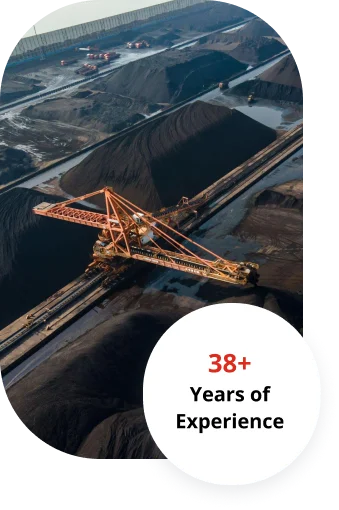
The Lighthouse ERP software for the coal sector was designed to satisfy the demands of coal imports, traders, and coal washeries. It automates processes, minimizes manual delays, and boosts overall operational efficiency. Coal companies all around India rely on Lighthouse ERP modules 38 years of experience to provide scalable, transparent, and successful coal trading ERP solutions that gather trust of industries.

RP for Coal Trading & Import Industry
lighthouseindia
lighthouseindia

Challenges of Coal Trading & Import Industry

Challenges Manual Billing Delays

Manual Billing Delays and Discrepancies

Processing bills manually usually results in missed deadlines, inaccurate financial entries, and payment delays, finance module in ERP makes it easy.

Challenges Financial Insight

Lack of Real-Time Financial Insight

It becomes challenging to monitor financial risk, spending assumptions, and real-time profit margins without an integrated coal import ERP system.

Challenges Disjointed Inventor

Disjointed Inventory and Accounting Systems

Disjointed tools lead to data silos and make inventory and financial record reconciliation difficult and prone to mistakes.

Challenges Handling and Tracking

Complex L.C. Handling and Tracking

It takes a lot of time to manually manage several Letters of Credit, and there is a significant risk of missing paperwork and compliance problems.

Challenges Inefficient Stock Monitoring

Inefficient Stock Monitoring at Transit Points

Many times, coal is not tracked while it is in transportation or at ports, which can result in supply chain blind spots, overstocking, or stock losses.

Challenges High Operational Errors

High Operational Errors Due to Manual Workflows

In the absence of automated ERP workflows, mistakes are common, work is repetitive and departmental turnaround is poor.

Benefits of ERP For Coal Trading & Import Industry

Benefit Automated Billing

Automated Billing for Coal Trade Operations

By automating difficult billing and payment procedures including agency bills, stevedoring charges, and expense bills, coal trading ERP avoids error and provides timely settlements.

Benefit Complete Financial Visibility

Complete Financial Visibility

With integrated financial modules, ERP gives coal importers and traders real-time financial control, allowing smart decision-making and cash flow management.

Benefit Seamless Inventory

Seamless Inventory-to-Accounting Cycle

ERP coal trading reduces delays and inconsistencies by organizing the entire inventory and accounting process, including tracking cost, port inventory, and other related entries.

Benefit Efficient L.C

Efficient L.C. (Letter of Credit) Management

ERP software handles the L.C. lifecycle efficiently from issuance to settlement, assisting companies in maintaining compliance and avoiding expensive financial mistakes.

Benefit Coal Stock Tracking

Multi-Location Coal Stock Tracking

ERP for coal washeries and depots makes it possible to track and manage coal inventories across ports, stockyards, and transit points while managing supply chain transparency.

Benefit Error-Free Workflow Automation

Error-Free Workflow Automation

ERP improves workflows accuracy across departments, lowers reliance on spreadsheets, and cuts manual errors when it is highly automated.

Features of Lighthouse ERP for Coal trading and Import Industry

icon

End-to-End Import Cycle Management

Handles the complete Purchase Contract to Sales Contract cycle with net rate and reverse calculations, supporting high seas sales, taxation, and real-time LC tracking.

icon

Vessel & Port Wise Costing with Expense Allocation

ERP enables vessel-wise costing and port-wise expense allocation, covering stevedoring, demurrage, insurance, freight, and agency bills.

icon

Advanced Inventory & Stock Tracking

Tracks grade-wise stock at ports, depots, sidings, vessels, and coal washeries; supports godown-wise inventory, blending at plots, and depot management via weighbridge.

icon

Automated Freight & Railway Rake Management

Manages rake request, allocation, and expense tracking with automated GRN generation and real-time branch/port transfers.

icon

Sales & Dispatch Automation & QC Monitoring

Covers the full sales cycle from enquiry to sales order and delivery order, supports grade/size-wise dispatch, real-time e-invoicing based on actual QC grade wise lot dispatch.

icon

Total Costs of Transactions with Laycan Time

Includes laytime and demurrage calculations, customs and CFA cost tracking for better shipment cost.

icon

Commodity Hedging & Profitability Analysis

Supports commodity price hedging for imports and offers division-wise, vessel-wise, and branch-wise profitability, cost control, and inter-division transactions.

icon

Integrated Financial Control & Compliance

Covers inventory-to-accounting, bill of entry for customs, LC tracking, real-time expense booking, and taxation ensuring accurate landed cost calculation and compliance.

icon

Real-Time Analytics & Approvals

Includes real-time accounts approval, payment advice, expenditure analysis, and performance tracking helping teams manage sales targets, dispatch efficiency, and division-wise books

Frequently Asked Questions About ERP for Coal Trading & Import Industry

It's a sector-specific ERP for coal traders, importers, and washery-linked distributors dealing with large-volume purchases from government e-auctions, washeries, and overseas suppliers. The system manages the full operational scope — import logistics, port inventory, grade-wise stock tracking, LC management, vessel costing, railway rake scheduling, and financial reconciliation — in one integrated platform rather than across disconnected tools.

Each import shipment is costed at the vessel level, with all port-related expenses — stevedoring, demurrage, insurance, freight, and agency bills — allocated accurately to that vessel. This vessel-wise view gives importers a precise landed cost per tonne for each shipment rather than averaging expenses across multiple arrivals, which is essential for negotiating sell prices and evaluating importer profitability.

Laytime is the agreed time allowed for loading or unloading a vessel, and demurrage is the financial penalty paid when that time is exceeded. Coal ERP calculates laytime and demurrage automatically based on arrival times, loading rates, and contractual terms — removing the manual calculation that frequently leads to disputes with shipping companies or underestimation of port costs.

The LC lifecycle — from issuance through amendments and utilisation to final settlement — is tracked within the system, with automated alerts for expiry dates and compliance checkpoints. Managing multiple LCs manually is time-consuming and error-prone; a missed document or an expired LC can halt a shipment or trigger banking penalties, which the ERP is designed to prevent.

Stock is tracked by grade and size separately at each location — port stockyards, godowns, coal sidings, washeries, and depots. Blending at plots and depot management through weighbridge integration are also supported. This multi-location, grade-wise visibility is what makes it possible to commit accurately to a customer on grade availability and plan dispatch without guessing at which yard holds what quality.

Rake requests, allocation, and expense tracking are automated, with GRN generation and branch or port transfer records maintained in real time. Railway logistics in coal is heavily paper-driven and deadline-sensitive — rake delays carry significant cost implications, and the ERP's automated rake management reduces both administrative delays and the financial risk of missed allocations.

The system supports commodity price hedging for import contracts and provides profitability analysis broken down by division, vessel, and branch. For coal importers managing foreign exchange exposure on USD-denominated purchases and INR-denominated sales, this integration of hedging and divisional P&L is what makes the true financial picture visible rather than buried in spreadsheets.